

Museum Glass is worth the investment because it reduces ultraviolet exposure, improves visual clarity, and controls reflections, helping protect and present valuable artwork when it is used as part of a complete conservation frame. For custom framing projects in New York City, the decision should start with the artwork, not the glazing price, because glazing affects both preservation and presentation.
For artists, photographers, collectors, galleries, and designers, the appropriate glazing depends on the artwork’s medium, size, condition, surface, and display setting.
This guide explains what Museum Glass is, how its anti-reflective and UV-protective properties compare with standard glass and UV-filtering acrylic, how to verify genuine Museum Glass, and which details to confirm during a framing consultation so you can make an informed conservation-framing decision.
What Is Museum Glass and How Is It Manufactured?
Museum Glass is a specialized glazing option used in conservation framing. It is selected when UV reduction, visual clarity, and reflection control are important to the artwork’s presentation.
Its performance comes from the way the glazing product is manufactured and treated. However, coating structures and production methods vary by manufacturer and product. Details such as silica-based layers or metal oxide coatings should be confirmed against the current technical specification for the exact glazing being proposed.
Standard clear glass does not automatically provide the same conservation or reflection-control qualities. Traditional non-glare glass can reduce visible reflections by diffusing light, but that diffusion may soften the view of fine details. Museum Glass is intended to maintain a clearer view while controlling reflection.
Museum Glass vs. Conservation Clear
Museum Glass and Conservation Clear both provide UV protection for framed artwork. The main difference is optical performance. Conservation Clear produces visible reflections similar to conventional glass, while Museum Glass has an anti-reflective coating that provides a clearer, less obstructed view of the artwork.
The additional cost of Museum Glass therefore pays primarily for improved clarity and reflection control, rather than UV protection alone. Conservation Clear may be appropriate when UV protection is required, but reflections are less important. Museum Glass may be worth the upgrade when dark tones, fine details, subtle textures, or challenging lighting conditions are central to the presentation.
When comparing Museum Glass with standard framing glass, consider:
The artwork’s sensitivity and medium
The desired level of clarity
Reflections in the display setting
The size and weight of the finished frame
Handling and safety requirements
The complete conservation specification
Clients commissioning custom frames in New York may begin by considering profiles and finishes, but glazing deserves the same level of attention.
How Does Museum Glass Prevent Invisible UV Light Damage?
Museum Glass uses UV-filtering properties to reduce the artwork’s exposure to ultraviolet light. This is especially relevant for works on paper, photographs, prints, and mixed-media pieces, although the appropriate specification still depends on the medium, condition, and display environment.
Some conservation glazing products are specified to filter up to 99% of ultraviolet light. The current technical information should be confirmed for the exact product selected. UV filtering reduces a significant source of exposure, but visible light, heat, humidity, and the duration of display still matter.
Artificial lighting should also be considered, even in rooms without windows. Museum Glass is most effective when combined with suitable placement and a complete conservation frame.
How Does Anti-Reflective Technology Improve Artwork Presentation?
Anti-reflective glass for fine art helps reduce distracting surface reflections. This allows the viewer to see more of the artwork and less of the surrounding room.
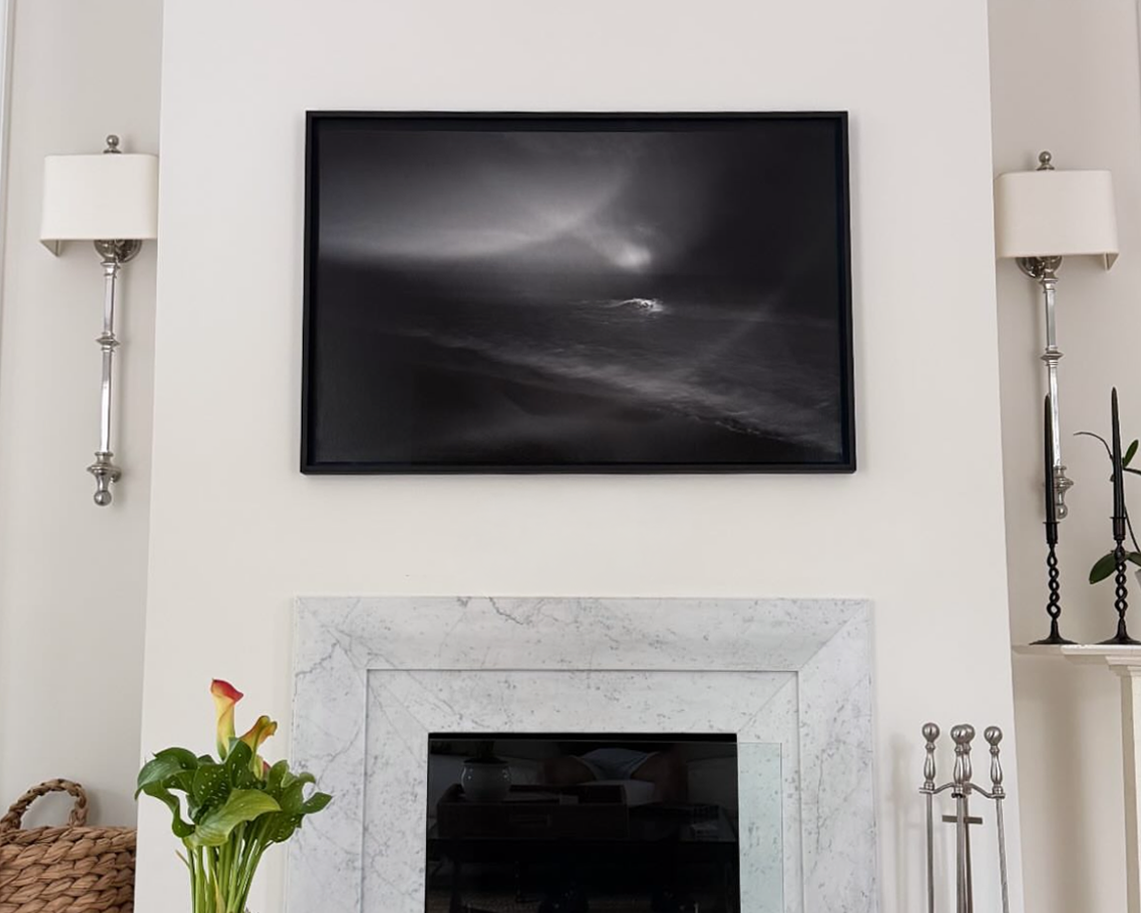
The difference is particularly relevant for dark photography, detailed prints, graphite drawings, and works with subtle tonal changes. Reflections from windows, track lighting, and bright architectural surfaces can interrupt the image or obscure fine details.
Traditional non-glare glass addresses reflection through diffusion. While this can soften reflections, it may also create a hazy view, especially when there is space between the glass and the artwork. Museum Glass is considered when the project requires both reflection control and a clear view.
Glazing clarity and reflections should be assessed in the artwork’s intended display setting. The direction of light, viewing distance, installation height, and likely sightlines can all influence how the glazing appears.
Museum Glass can appear nearly invisible under suitable lighting, although direct light and sharp viewing angles may still create visible reflections.
When Is Museum Glass Worth the Additional Cost?
Museum Glass may be worth the additional cost when the artwork benefits from both UV protection and strong reflection control. The upgrade is particularly relevant when glare would obscure dark tones, fine details, subtle textures, or the intended viewing experience.
The initial cost should be considered in relation to the complete framing project, where frames can be designed using conservation-grade materials. Original works, fine art prints, photography, and limited editions often require decisions about mounting, backing, spacing, glazing, and frame construction.
Selecting each component around the artwork can reduce avoidable risks and support a conservation-led framing specification.
Five factors can help determine whether Museum Glass is a good investment:
The importance of visual detail: Fine lines, dark tones, and subtle textures may benefit from improved clarity.
The display environment: Windows, lighting, and long sightlines may make reflection control more important.
The artwork’s medium: Works on paper and photography can require careful glazing and separation.
The expected display period: Artwork intended for long-term display may justify a more considered glazing specification.
The complete frame package: Museum Glass provides the greatest value when it works with conservation-level mounting, matboard, spacers, backing, and frame construction.
Archival glazing cannot correct unsuitable mounting or backing. The mount, matboard, archival spacers, backing, glazing, and frame profile must work as one conservation system.
Clients comparing framing services in NYC should ask how that complete system will be developed. Price alone does not explain material stability, reversibility, clarity, handling, or long-term performance.
When Should You Choose Optium Museum Acrylic Over Museum Glass?
Woodman Frames’ approved materials include Museum Glass and UV-filtering acrylic. The proper choice depends on the artwork and project rather than a general rule that one is always superior.
UV-filtering acrylic can offer practical advantages for larger or lighter-weight installations. Reducing glazing weight may affect frame construction, support, handling, and installation planning, particularly as the size of the work increases.
Safety and breakability may also influence the decision in high-traffic settings, traveling exhibitions, or other projects with demanding handling conditions. These factors should be reviewed with the frame’s scale, movement, support, and installation context.
Unlike regular acrylic, Optium Museum Acrylic has an anti-static surface. This makes it suitable for many static-sensitive materials, including delicate works that may not be appropriate for conventional acrylic. Its lower weight and resistance to breakage can also make it useful for oversized artwork, high-traffic spaces, traveling exhibitions, and other projects with demanding handling requirements.
The choice between Museum Glass and Optium Museum Acrylic depends on the artwork’s medium, size, weight, display environment, and handling requirements. The exact glazing product should be identified in the framing specification because regular UV-filtering acrylic and Optium Museum Acrylic do not have identical optical, anti-static, or surface properties.
How Can You Verify That Your Custom Framing Features Genuine Museum Glass?
Visual inspection alone is not a reliable way to confirm a glazing product. Reflections and residual color can change with the lighting, viewing angle, wall color, and surrounding surfaces.
The most dependable approach is to ask the framing studio to identify the glazing in the specification. The studio should also explain why that product suits the artwork’s medium, size, weight, display environment, and handling requirements.
A complete framing review should confirm:
The specific glazing category
The UV-filtering and reflection-control purpose
The mat or spacer separating the artwork from the glazing
The archival backing and matboard
The reversible mounting method
The profile depth and construction required to support the complete frame package
Any weight, handling, or installation considerations
In a Long Island City custom framing consultation, glazing should never be discussed in isolation. Museum Glass works with 100% cotton rag matboard, archival backing, archival spacers, and reversible mounting to form a conservation-level package.
The same principle applies when specifying frames for a collection or exhibition in New York City. Documentation and clear material specifications are more reliable than a colored reflection when confirming the glazing product.
FAQs
1. Why is Museum Glass more expensive than standard framing glass?
Museum Glass is a specialized conservation-glazing product developed for UV reduction, clarity, and reflection control. Standard glass does not automatically provide the same combination of qualities.
The comparison should consider the artwork and the complete frame package, not glass price alone. Mounting, backing, spacing, construction, weight, and display conditions all influence the final specification.
2. Does Museum Glass eliminate all light reflections?
No. Museum Glass provides a high level of reflection control, but no glazing should be described as invisible under every lighting condition.
Direct light and sharp viewing angles may still create visible reflections. Lighting, placement, and sightlines should be considered with the glazing choice.
3. Can Museum Glass stop artwork from fading in direct sunlight?
Museum Glass reduces exposure to ultraviolet light, but it cannot guarantee that artwork will not fade or change. Visible light, heat, humidity, and the duration of exposure can still affect sensitive materials.
Framed artwork should therefore be kept away from direct, continuous sunlight. UV-filtering glazing supports preservation, but it does not replace thoughtful placement.
4. Is Museum Glass necessary for artwork displayed in rooms without windows?
The answer depends on the artwork and the room’s complete lighting environment. Window placement is only one part of the assessment.
The framer should consider artificial lighting, viewing angles, medium, display period, and the desired level of reflection control. Museum Glass may still be useful where clarity and UV reduction are priorities.
5. How does Museum Glass preserve the long-term appraisal value of a collection?
No glazing can guarantee an artwork’s appraisal or resale value. Museum Glass can, however, reduce avoidable UV exposure and support the artwork’s physical condition when used within a conservation frame.
Condition is only one factor that may affect valuation. Any financial or appraisal decision should remain separate from the glazing recommendation. The framer’s role is to develop an appropriate protective and visual system around the work.
Is Museum Glass Right for Your Artwork?
Museum Glass is worth considering when UV protection, clarity, and reflection control are important to the artwork’s presentation. Conservation Clear or UV-filtering acrylic may be more appropriate for other projects, depending on the medium, scale, weight, display conditions, and handling requirements.
Woodman Frames is a specialized custom framing studio in Long Island City, Queens, working with artists, collectors, galleries, art advisors, and designers across New York City. Each framing specification is developed around the artwork, bringing together the glazing, reversible mounting, archival materials, frame profile, and construction as one considered system.
Contact Woodman Frames to discuss the artwork and arrange a consultation at the Long Island City studio.