
Custom Framing in Manhattan
Every framing decision at Woodman Frames starts with the artwork itself: its medium, its condition, and where it will ultimately hang, rather than a standard package applied by default. The studio operates from Long Island City, Queens, and works with Manhattan collectors, artists, galleries, interior designers, and corporate clients who bring pieces in for consultation.
Archival materials and fully reversible construction are the baseline for every project the studio takes on, not a premium tier reserved for higher-budget work. That standard applies to the mat, the mounting, and the glazing alike.

Serving Manhattan From the Long Island City Studio
Manhattan's concentration of galleries, private collections, and design studios makes it one of the city's most demanding markets for framing that has to hold up in a professional setting. Woodman Frames works with clients across the borough who bring work to the Long Island City studio for consultation, alongside collectors and design professionals in Brooklyn and Queens.
There is no separate Manhattan storefront. The studio is based entirely in Long Island City and works by appointment only. Manhattan clients typically schedule a consultation at the studio directly. For more on the space itself, see Custom Framing in Long Island City, or Custom Framing in NYC for the broader service area.
Manhattan clients range from independent artists and private collectors to galleries, art advisors, interior designers, and corporate or institutional accounts, and each one brings a different set of priorities. A gallery working against an exhibition date needs something different than a collector managing a growing personal collection, or a designer specifying frames across an entire office.
Whatever the project, it starts with a consultation that looks at the piece's medium, condition, scale, and eventual display setting before any material decision gets made. A single painting and a fifty-piece corporate collection are held to the same conservation standard either way.
Who the Manhattan Studio Works With
Conservation, Built Into Every Component
No single material makes a frame archival by itself.
The combination does. Mat, backing, spacers, mounting method, glazing, and profile each do a specific job, and none of them are chosen automatically. The artwork's medium and condition drive every one of those decisions.
For works on paper, that typically means 100% cotton rag matboard, acid-free backing, and hinging that can be reversed later, using Japanese tissue and wheat paste where the piece calls for it, so the mounting is never permanent. Photographs, canvas, and mixed-media pieces each need their own approach, since no single method works across all of them.
Glazing is chosen the same way. Museum Glass is one option, and UV-filtering acrylic is another. Acrylic tends to make more sense for larger or lighter pieces, and the right call depends on the artwork's size, weight, how it will be displayed, and how much reflection control the space needs.
None of this eliminates risk entirely, and Woodman Frames does not claim it does. What it does is reduce exposure to ultraviolet light, acid migration, and the structural stress that comes from materials that were not built to last, while keeping the door open for future conservation work rather than closing it with something that cannot be undone.
Built In-House, From Raw Hardwood to Finish
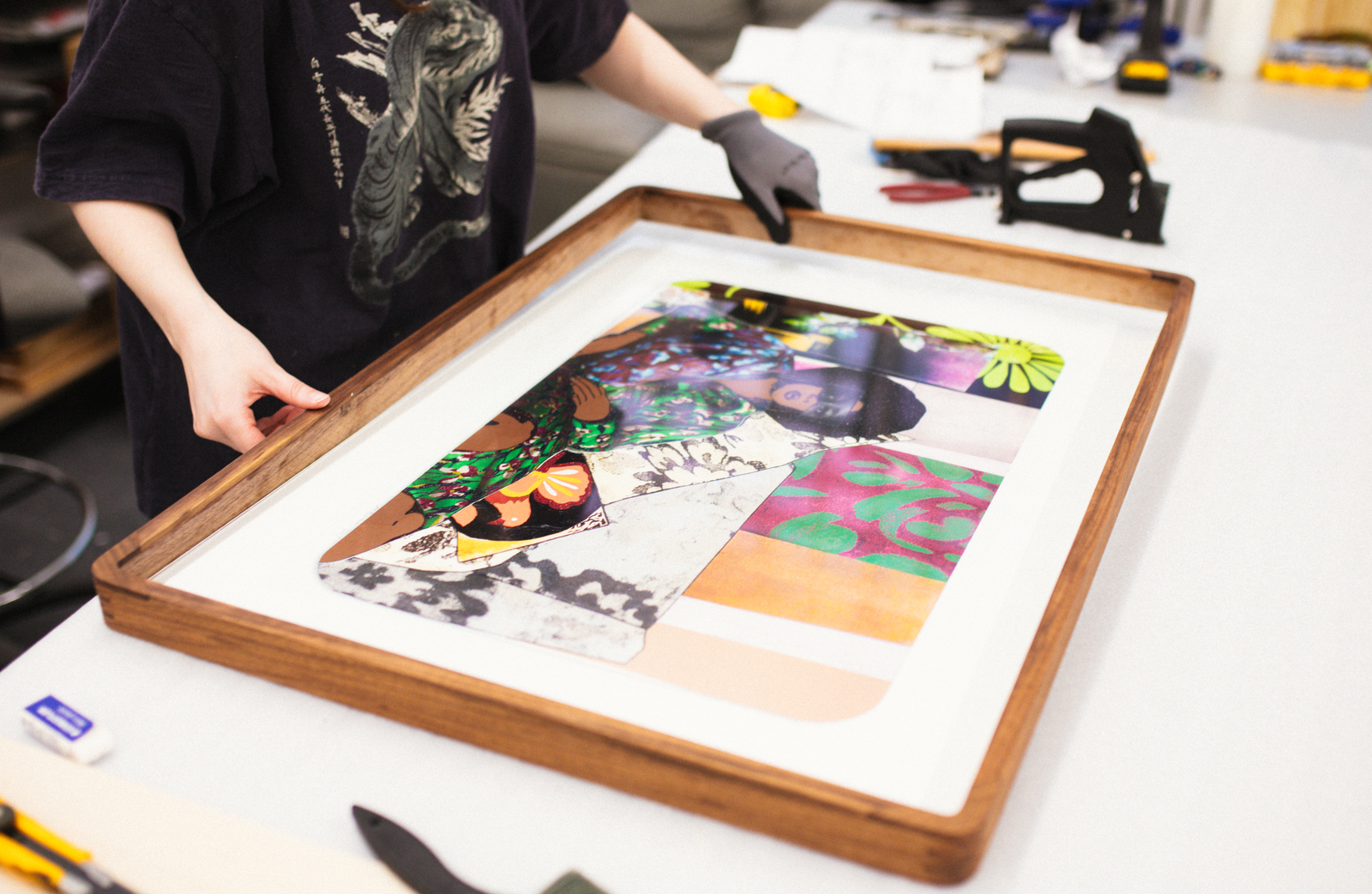
Each profile that leaves the Long Island City studio starts as raw hardwood: maple, ash, cherry, oak, walnut, and tiger maple most often, with white oak, mahogany, sapele, wenge, and rosewood available for pieces that call for something less common. Nothing is ordered pre-cut from a molding catalog.
The studio mills, joins, and finishes each profile itself, using a spline joinery system throughout. Finishes range from natural oil and wax to lacquer, custom stains, whitewash, and pigmented tones, chosen for how they read against the piece rather than picked off a shelf.
Aluminum profiles are also available, in brushed, anodized, or powder-coated finishes, along with hybrid wood-and-metal designs for work that does not call for a traditional wood frame.
For gilded finishes, the studio does traditional water gilding entirely in-house, with gold leaf applied by hand and left burnished or matte depending on the piece. It comes up most often for period frames, ornamental profiles, or projects where a hand-applied metallic finish is central to the design, and each one is built around the artwork's era and medium rather than a standard gilded look.
Canvas, Scrolls, and Oversized Work
Canvas pieces are stretched on kiln-dried bars, aluminum-reinforced for anything large, and set into either a hardwood or aluminum floater frame. Scrolls, textiles, fragile works on paper, and other non-standard formats get custom strainers and reinforced backing built around whatever structural support the piece needs.
Scale and weight come up early in the consultation for a reason. A large or heavy piece changes what glazing and mounting method make sense, so that conversation happens before the profile gets chosen, not after.
How a Project Moves From Consultation to Finished Frame
The process starts with a consultation covering the artwork itself, what the client is trying to achieve, the piece's scale, and the timeline involved.
From there the studio works out profile, finish, mat, and glazing, then mills, joins, sands, and finishes the frame on-site.
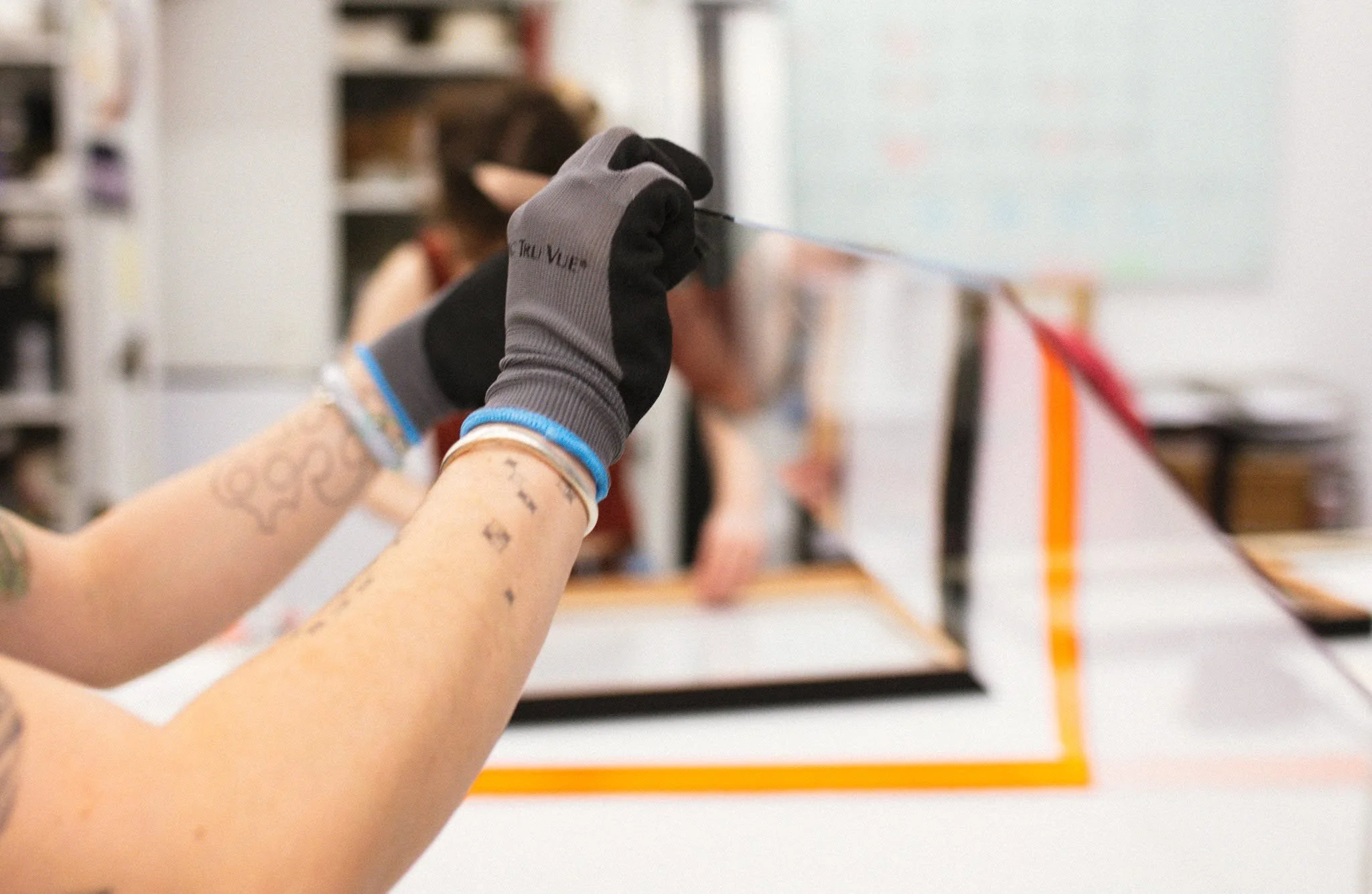
Mounting and glazing happen in a dust-free part of the studio, using archival, fully reversible methods throughout.
Once a piece is finished, it is packaged for safe transport, and the studio can coordinate with professional art handlers when a project calls for it. How long any of this takes depends on scope and finish, and gets discussed at the consultation rather than estimated in advance.
Framing for Manhattan Interiors and Exhibition Spaces
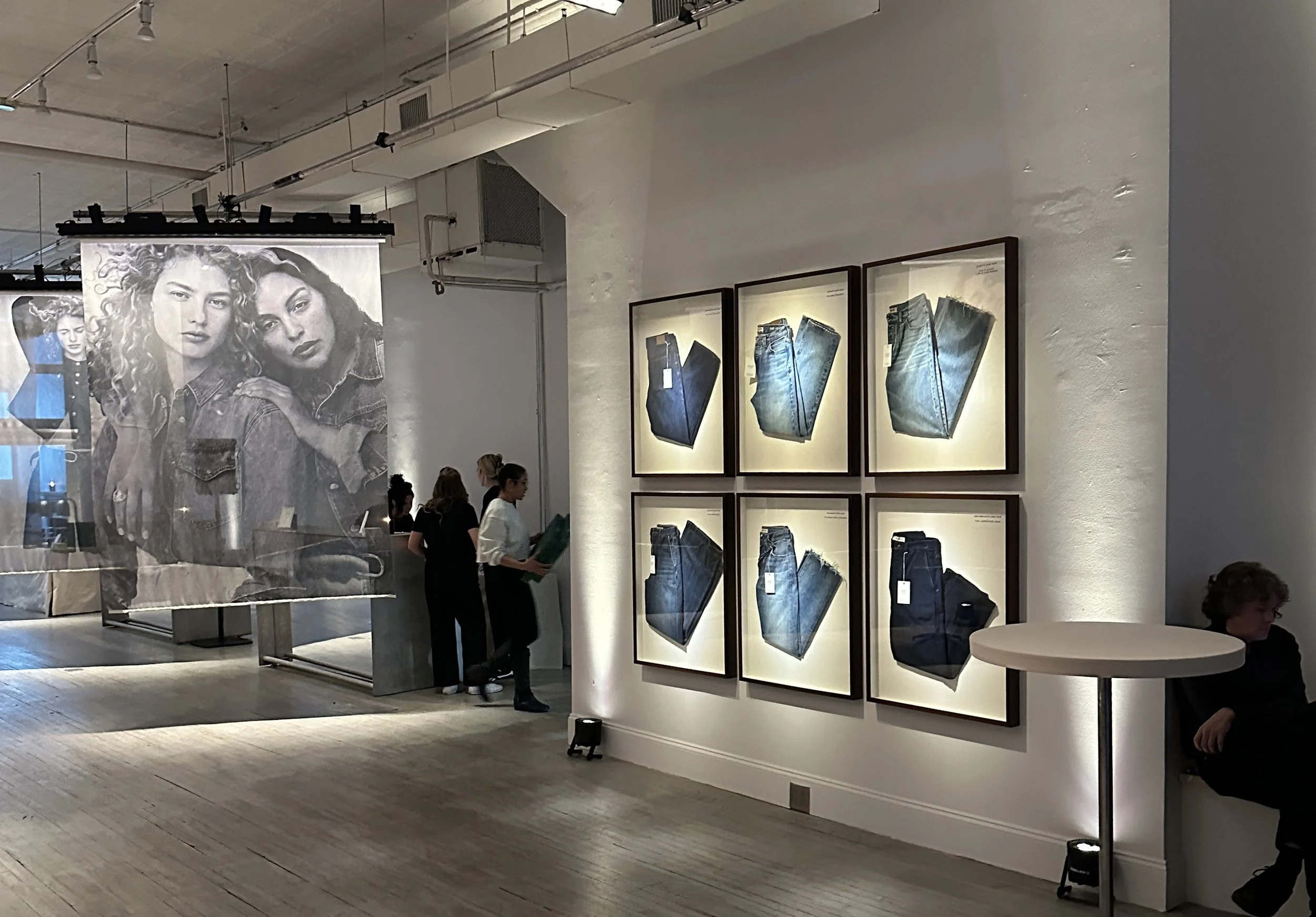
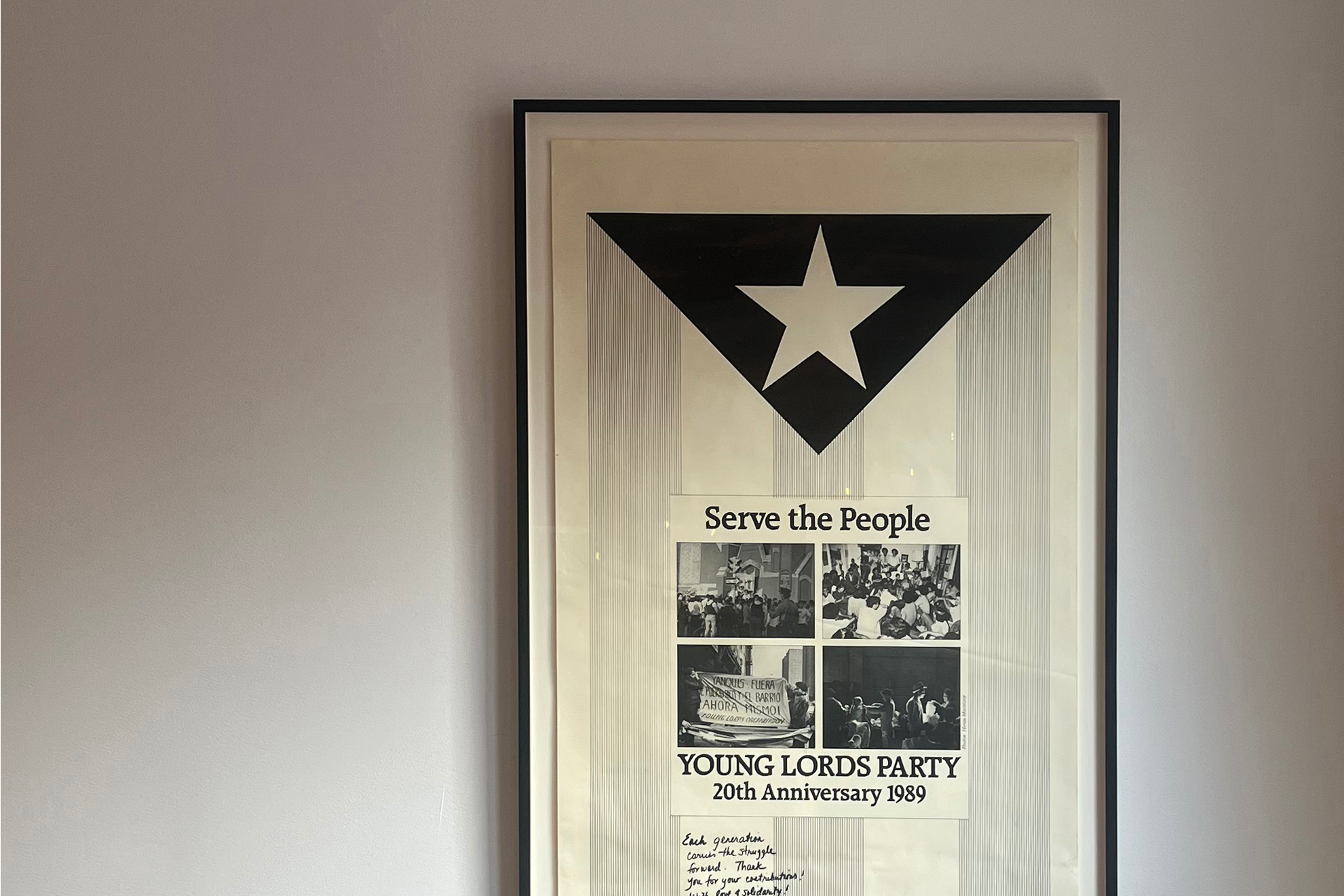
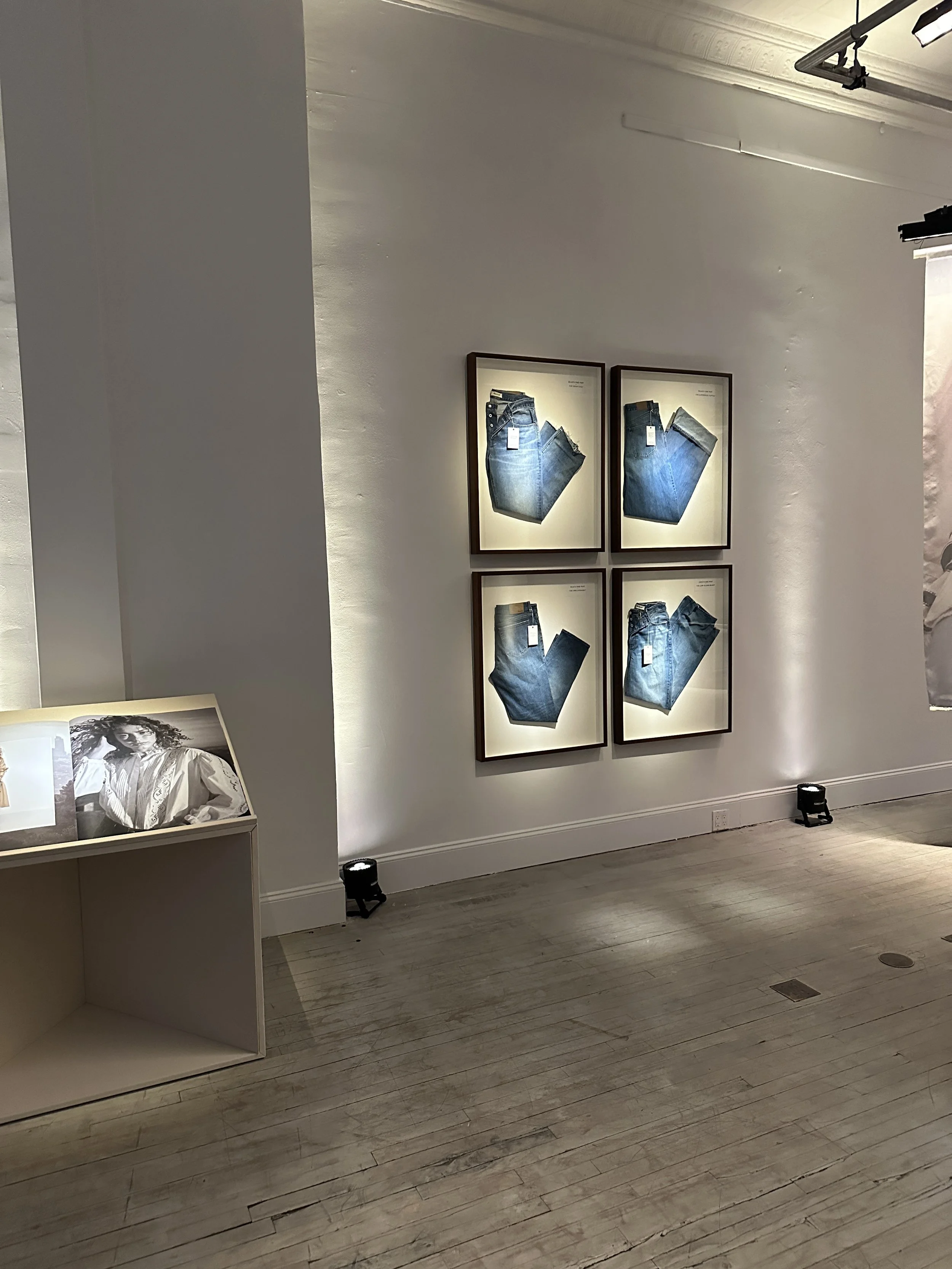
A frame does not exist separately from the room or gallery wall it is going into. Lighting, scale, sightlines, and the surrounding architecture all affect how the finished piece reads. Woodman Frames works on projects in private residences, corporate offices, galleries, and design-led interiors across Manhattan and the wider city, with the display setting factored in from the start.
When a project involves multiple pieces, keeping the specification consistent across all of them is what makes a collection read as one body of work instead of a set of mismatched frames.
Frequently Asked Questions About Custom Framing in Manhattan
-
Price comes down to the size of the piece, the materials and glazing involved, and the mounting method it needs. Every project is built to the same conservation standard regardless of budget, and an exact quote follows the consultation once the studio has seen the artwork.
-
Archival, acid-free materials and reversible mounting are standard on every project, not something added for an extra fee. The goal is to reduce avoidable risk to the piece while keeping future treatment or reframing possible, rather than locking in a fixed, permanent construction.
-
Yes. Photographs, prints, watercolors, drawings, and other works on paper each get a mounting approach suited to that specific medium, with reversible hinging used on original works on paper where appropriate.
-
Yes. The studio regularly works with designers, galleries, art advisors, and corporate or institutional collections, on both single pieces and larger multi-piece projects that need consistent specification throughout.
-
The studio is based in Long Island City, Queens, and works with clients across Manhattan, Brooklyn, Queens, and the rest of New York City. It is appointment-only. There is no walk-in Manhattan location.
Have a piece, a collection, or an exhibition coming up?
Schedule a Consultation
Get in touch to set up a consultation at the Long Island City studio. Bring the artwork's dimensions and any thoughts on how it will be displayed, and the studio will work through the framing decisions from there.