

 Image 1 of 1
How We Approach Matting and Backing
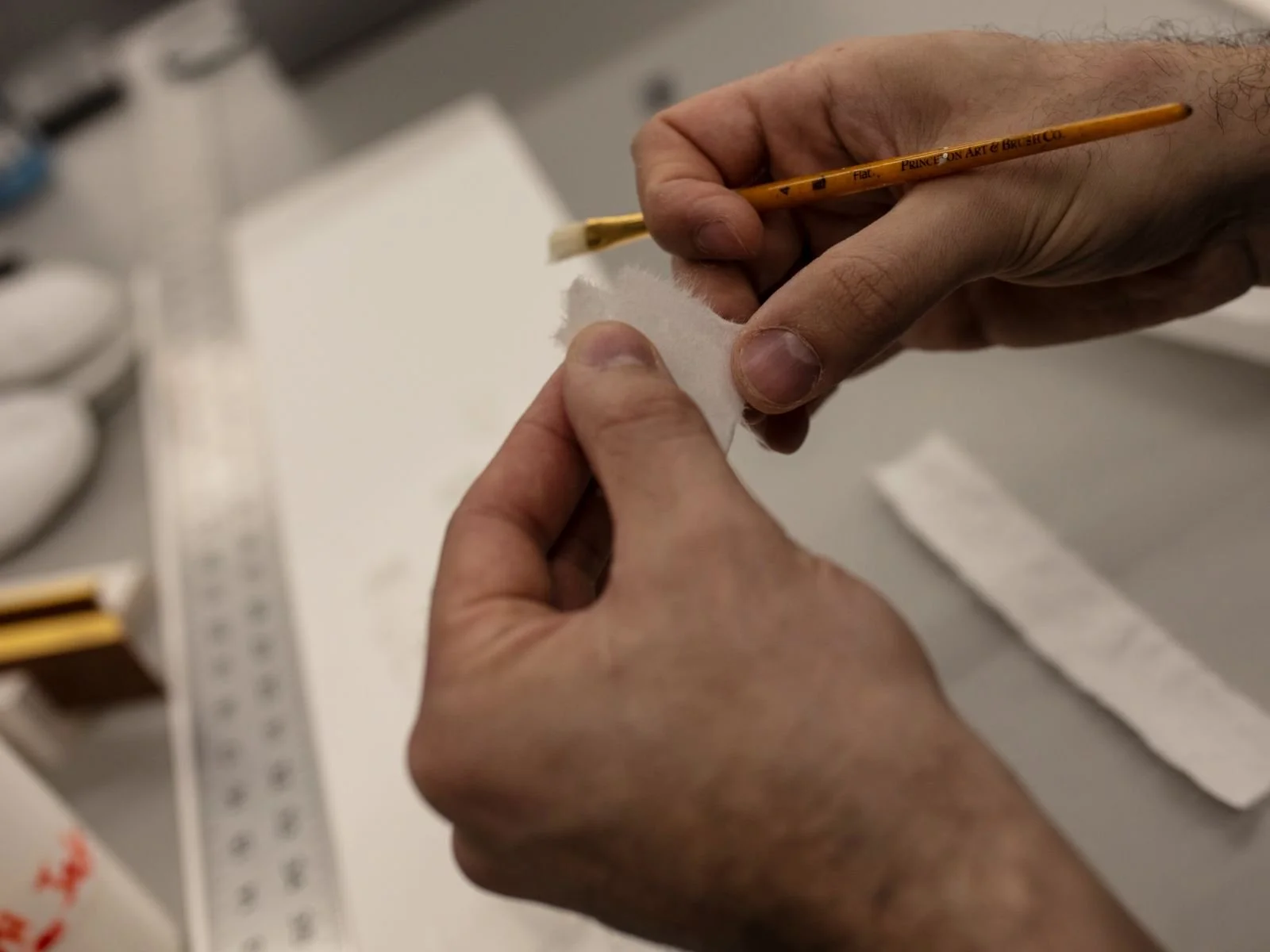
Original works on paper are attached with reversible hinging, using Japanese tissue and wheat paste, so the work can be removed and remounted later if needed. Photography and mixed media are assessed piece by piece. Some works are float-mounted on museum board, while others need a shadow mount for added depth and air space.
What We Consider in a Matted Frame
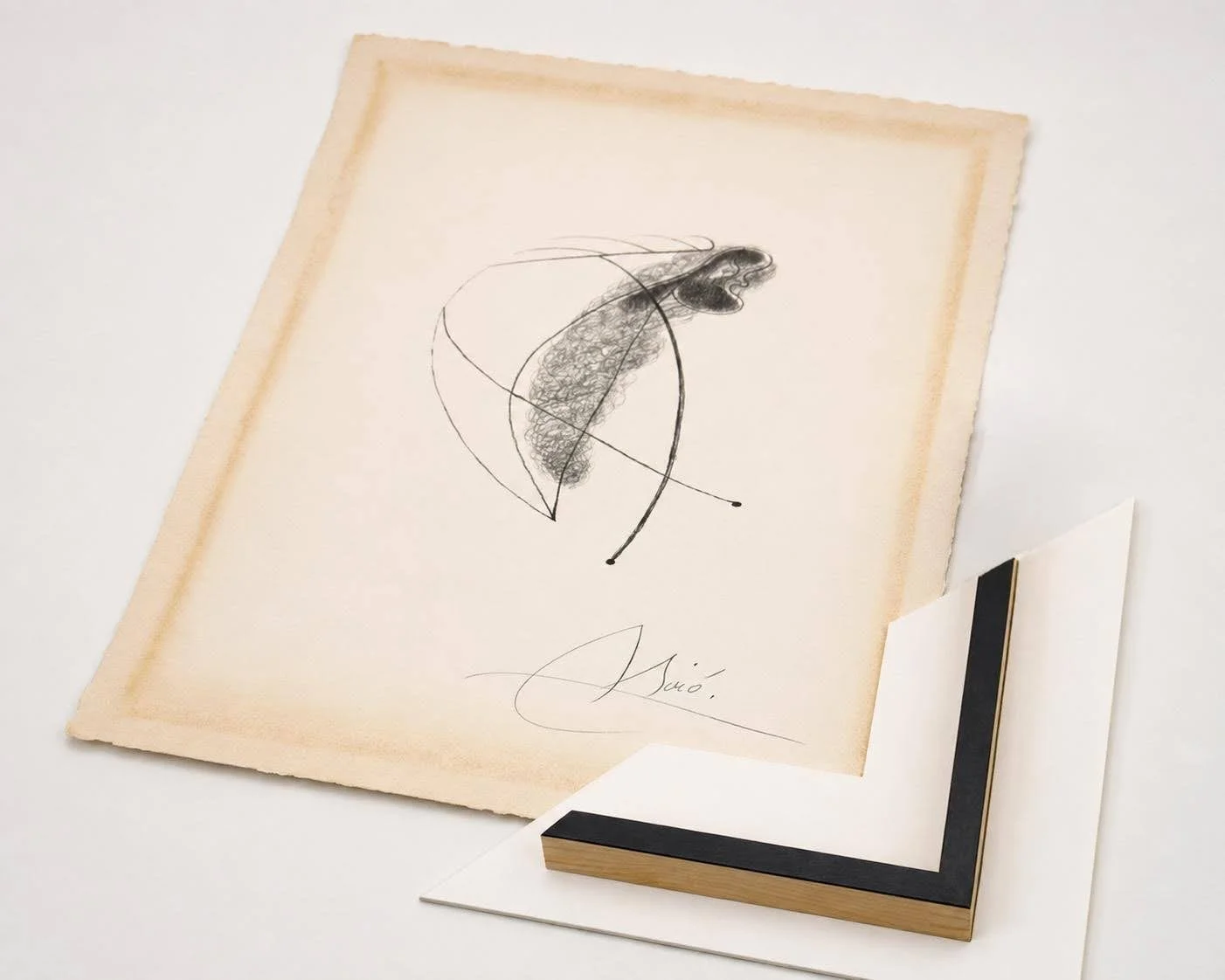
Mat width. A wider border can give a small work presence on the wall, while a narrow one keeps the frame compact.
Mat tone. The tone of the board changes how the artwork’s own colors read.
Window or float. A window mat frames the image edge. A float mount shows the full sheet, edges included.
Depth. Archival spacers and shadow mounts create space between the work and the glazing where the piece needs it.
Backing. Acid-free boards support most works, and larger or specialist pieces may need reinforced backings.
The Conservation Standard
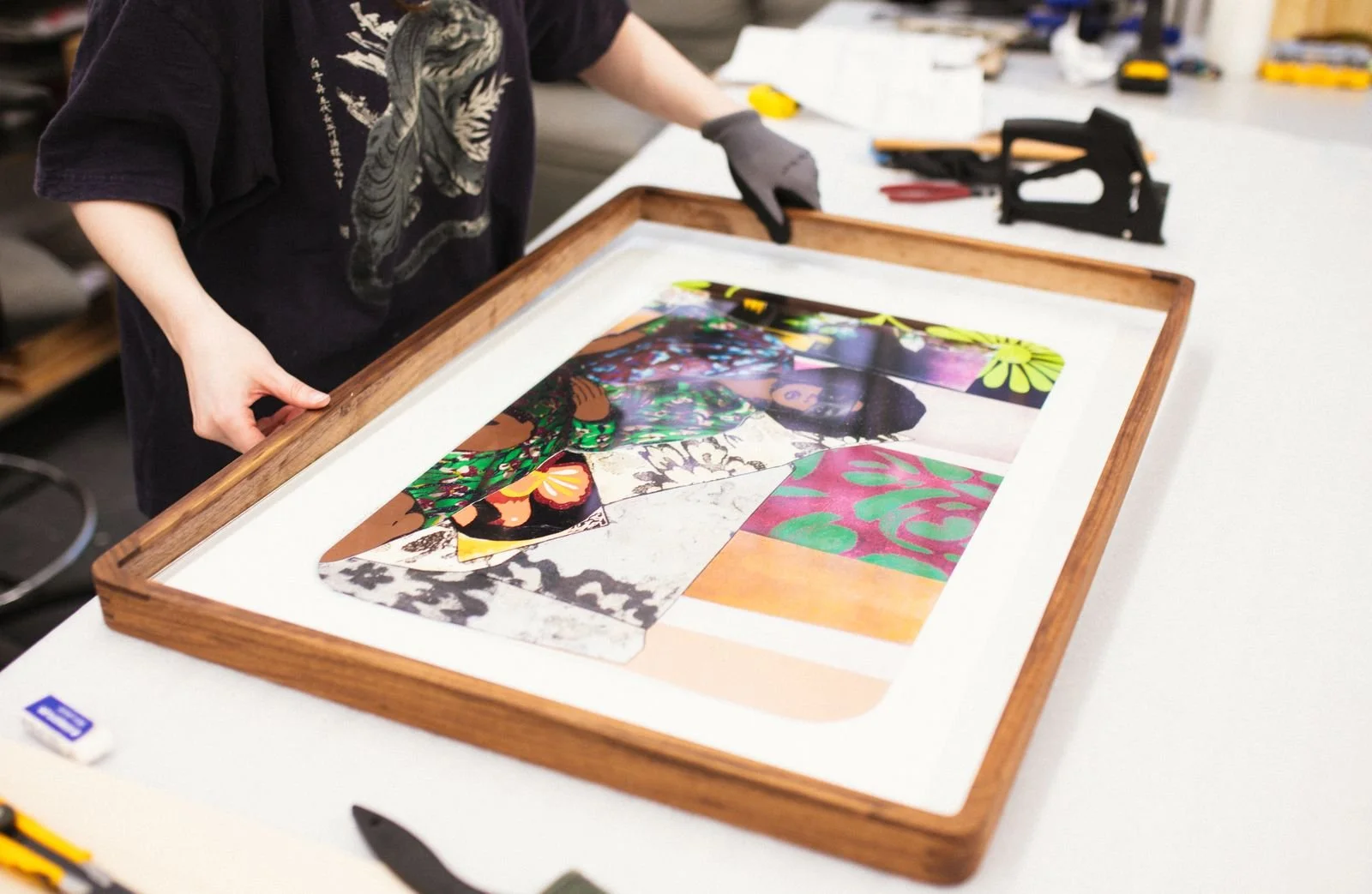
We use 100% cotton rag matboard and acid-free backing on every project. Together with UV-filtering glazing and reversible mounting, these materials help reduce avoidable risks to the artwork. All mounting and glazing is done in a dust-free environment before the frame is closed.
Frequently Asked Questions About Matted Frames and Backing
-
That depends on the size of the piece, the mat and mounting method we use, the frame itself, and the glazing. We’ll give you a quote after a consultation.
-
No, cotton rag mats and acid-free backing are the standard for every frame we build, no matter what the size or budget.
-
No frame can completely stop fading. Matting, UV-filtering glazing, and stable materials help reduce the risk, and display conditions still matter.
Book a Matting and Backing Consultation
Book a consultation with Woodman Frames to plan a matted frame for a drawing, print, photograph, or other work on paper. Bring the artwork and its dimensions, and we will work through mat proportions, mounting, and backing together.