

Installing Framed Art
When managing the lifecycle of an asset, the process does not end when the construction of the frame is complete. Installing framed art requires the same level of technical precision and material intelligence that goes into the conservation custom framing itself.
For galleries, institutions, and serious collectors, the final installation phase is a critical preservation step that directly impacts the safety and longevity of the artwork.
The question of secure execution isn't just about placing a hanger on a wall surface. It is a matter of structural engineering and logistics that ensures large works remain secure over time.
By partnering with an elite workshop that specializes in museum-quality materials and professional engineering, you protect both the physical art and the architectural spaces housing it.
Whether coordinating a minimalist corporate layout or preparing an extensive collection for display, material logistics and frame architecture dictate the outcome.
Woodman Frames builds high-caliber structural integrity directly into each custom profile, ensuring that heavy exhibition packages remain perfectly stable, secure, and flush against the wall plane over years of display.
What logistical planning must occur before a large artwork arrives on-site?
An effective large-scale artwork installation guide begins long before the transport vehicle arrives at the destination.
Art handling teams must map the entire transit pathway to identify physical constraints, including elevator weight and height limitations, door frame clearance dimensions, and tight hallway corners.
Oversized crates or heavy framing packages can easily become trapped or damaged if these architectural boundaries are not measured in advance.
Once the piece safely enters the space, establishing a clean, dedicated layout staging area is paramount to protecting the investment. This zone must be completely cleared of construction debris and foot traffic, utilizing high-density foam blocks, neoprene layout mats, or moving blankets.
These protective barriers isolate the raw wood finishes and glazing materials from direct contact with hard concrete or hardwood floors, ensuring the integrity of the custom framing remains completely unmarred.
Furthermore, strict safety protocols dictate the coordination of team personnel based on physical thresholds.
A single installer becomes a severe safety liability once a frame package exceeds manageable dimensions or weights.
Beyond specific weight limits, multi-person lifting teams, scaffolding, or specialized material lifts become mandatory to manage the physical load safely and prevent structural accidents during handling.
How do you calculate structural wall loads and anchor points for heavy art?
Installing oversized framed art safely is a matter of structural engineering, requiring an accurate calculation of the total frame weight relative to the fastener shear capacity. The dead load weight of massive glass or acrylic glazing, combined with thick matting and solid wood profiles, must be weighed precisely.
When assessing fine art photography that has undergone careful archival mounting, which utilizes stable, non-damaging substrates and reversible stabilization techniques to maintain structural flatness, the cumulative dead load increases significantly.
It must be matched against the exact manufacturer-rated shear and pull-out capacities of the chosen wall anchors.
Verifying the sub-structure integrity requires tracing internal structural metal or wood studs over wide horizontal spans using precision scanning tools, then using a tape measure and level to mark anchor positions before fastening.
Fasteners must be driven directly into these vertical structural members rather than relying solely on brittle drywall or plaster. Distributing the load across multiple studs ensures that the wall assembly can bear the continuous downward pull of a heavy frame without deflecting.
When a layout demands a placement where space exists between studs, professional installers must implement engineering solutions for hollow walls. For frames under 10 lbs, standard picture hooks with small nails can provide adequate support.
When wire-and-hook systems are used, the weight rating of both hooks and wire must exceed the frame weight. On wider frames, two hooks help distribute the weight and reduce tilting. In these scenarios, heavy-duty structural toggle bolts must be used to grip the rear face of the drywall over a wider surface area.
For exceptionally heavy installations, an integrated plywood backing plate can be installed behind or over the drywall surface to distribute the structural load seamlessly across the assembly.
What specialized rigging hardware is required for commercial or high-weight frames?
When securing heavy-weight frames, lightweight hanging wire setups are completely forbidden because they stretch, deform, and create unsafe focal tension. Instead, commercial art installation requirements mandate the use of heavy-duty strap hangers and D-ring assemblies fastened directly into the picture frame stiles.
For contemporary spaces featuring mixed media, graphics, and large-format photography, choosing a premier custom framing service like Woodman Frames guarantees that the integrated rigging components are perfectly rated for long-term wall attachment and correctly mounted for stability.
Calculating interlocking French cleat and Z-bar linear foot strength allows installers to match the hardware length to the exact weight of the package. This approach is highly critical when hanging oversized works, as interlocking Z-bar hangers provide the continuous linear support needed to prevent the custom wood frame from bowing under load.
Aluminum French Cleats (Z-Bars): Provide incredible linear shear strength per foot, distributing heavy frame weight evenly across a horizontal span and anchoring into multiple wall studs simultaneously.
Heavy-Duty Exhibition Hardware: Multi-screw steel strap hangers and heavy-gauge D-rings bolted directly into the solid hardwood stiles eliminate single-point failures, ensuring the framing package cannot shift or bend under load
Heavy-duty picture hanger systems: Available in different sizes; specialized commercial heavy-duty picture hooks are precision-rated to support structural loads up to 100 pounds.
Anti-theft and safety locking hardware: Hidden institutional locking markers or bottom T-screws physically lock the lower perimeter of the frame to the wall, preventing seismic displacement, accidental drops, or unauthorized removal.
What step-by-step physical protocols ensure a flawless, level installation?
Achieving a perfectly straight installation across an expansive wall space requires bypassing the inherent imperfections of crooked baseboards or uneven ceilings.
Art handlers deploy cross-line self-leveling laser levels and multi-axis digital transit systems to cast absolute horizontal and vertical baselines across the gallery surface.
These light lines provide an unyielding reference point for plotting hardware positions across wide spans.
Executing the safe lift and hardware alignment technique requires clear verbal commands and coordinated movements among the installation crew. The team must lift using their legs, keeping the weight of the massive frame distributed close to the body to maintain stability.
The frame is lifted slightly above the target baseline and carefully lowered until the recessed rear hardware engages smoothly with the wall rails.
The final alignment and mechanical securing sequence involves checking both plumb and level across the top and side margins using digital levels. Once the horizontal axis is verified as completely true, the bottom safety brackets or institutional locking fasteners are systematically engaged.
This permanent mechanical lock prevents the frame from shifting out of true flat alignment during future cleaning or building maintenance.
What post-installation environmental safety measures must be verified?
Once the frame is mechanically secured to the wall, post-installation environmental safety measures must be verified to prevent long-term degradation. High-density neoprene spacer bumpers must be applied to the lower rear corners of the frame package to create a consistent gap.
This gap allows proper ambient airflow behind the frame, preventing moisture trapping and destructive thermal bridging between cold exterior walls and the art backing. UV light degrades artwork over time, and direct sunlight can destroy paintings, photographs, and posters.
Premium glazing options like Museum Glass or specialized UV acrylic filter out harmful rays to shield the artwork from permanent light damage.
In busy commercial spaces or institutions, mitigating environmental vibrational risks is a crucial step for long-term preservation. Environments near heavy HVAC systems, automated doorways, or active transit corridors subject walls to continuous micro-vibrations that can slowly loosen substandard anchors over time.
Hanging framed work in hallways can also help reduce direct sunlight exposure in some buildings, especially where adjacent walls are covered with reflective finishes or decorative treatments.
Utilizing locking museum hardware and deeply anchored cleats ensures that the framing assembly remains unaffected by these continuous structural micro-shocks.
The final phase of a professional project involves as-built mapping and documentation for long-term facility planning and future collection management.
The exact hardware locations, hidden stud layouts, wall anchor types, and total load data are recorded into a building maintenance log. This ensures that future facility managers or art conservators can safely manage the space without guessing what lies behind the drywall.
How do museum-grade custom picture frame profiles minimize risk during structural installation?
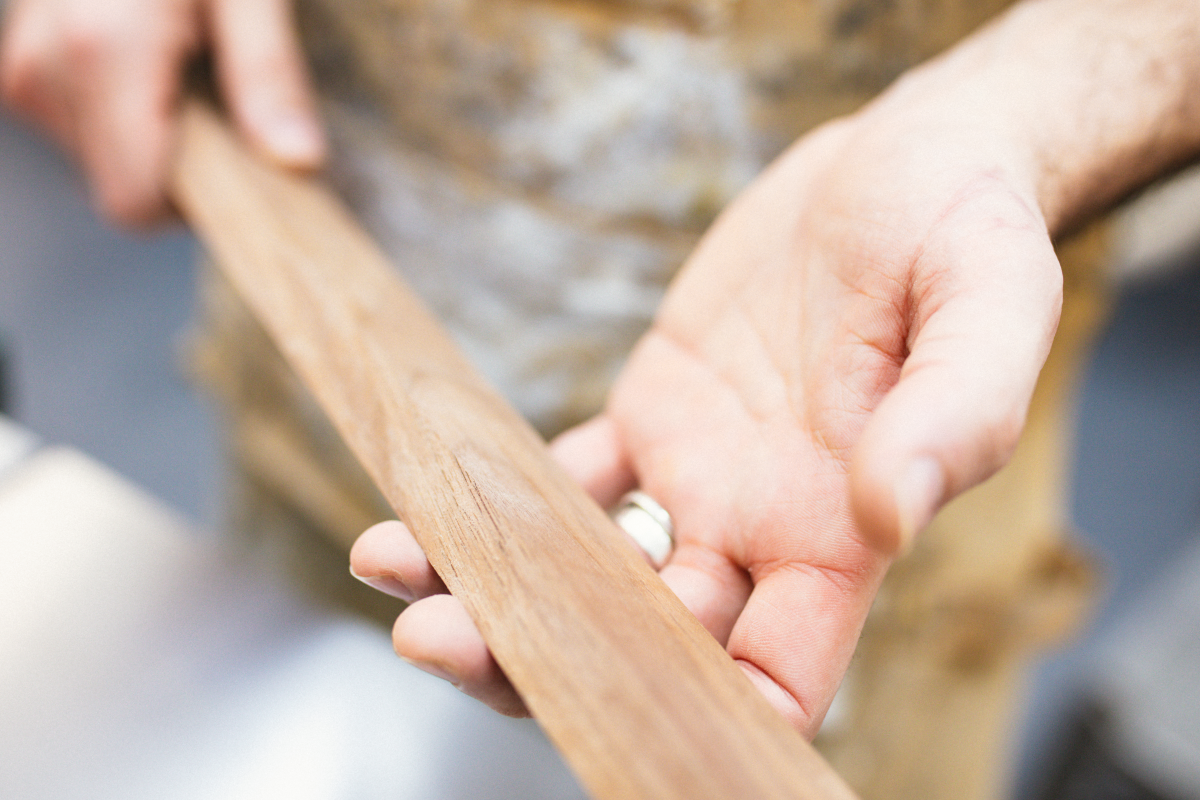
The structural success of an installation depends entirely on the integrity of the shell holding the artwork package together. Premium, custom-milled natural hardwood frames possess the dense grain structures and robust joinery needed to withstand immense corner shear forces. Our conservation custom framing utilizes these dense materials, such as walnut, hard maple, ash, and white oak, to ensure the frame resists structural torque, twisting, or bowing when suspended under intense load.
In residential or office settings, the bottom of the frame typically sits 6 to 8 inches above nearby furniture, and the size of the art should stay proportional to the piece below it.
Furthermore, our workshop engineers deep-rear profiles for recessed flush rigging into every custom frame profile. These deep, precise rear rabbets allow heavy-duty Z-bars or custom wood cleats to sit entirely flush within the frame envelope.
This allows massive, heavy frames to lie perfectly flat against the wall plane, eliminating unsightly gaps and preventing dust accumulation behind the frame.
For a traditional painting or contemporary print, a structurally sound profile finished with a custom stain or clean lacquer can complement the space effectively without compromising stability.
By maintaining strict control over our custom picture framing services from milling to final assembly, we eliminate structural weak points. Precision-joined corners prevent heavy frames from deflecting or pulling apart when subjected to continuous downward shear forces.
This reliable structural shell works in tandem with heavy-duty museum framing hardware to provide absolute safety for your irreplaceable art pieces.
FAQs: Addressing Core User Intent
When does an installation require aluminum French cleats instead of traditional wall hooks?
Oversized, heavy, or long horizontal artwork packages require aluminum French cleats or Z-bars rather than traditional hooks. Cleats distribute the weight evenly across a wide horizontal plane, whereas standard hooks concentrate the entire load onto a small, vulnerable point in the wall.
How do you safely calculate the number of wall studs required to anchor an oversized frame?
Calculate the cumulative weight of your frame package against the verified shear capacity of your structural fasteners. Ensure the width of your interlocking wall cleat is long enough to span multiple separate vertical studs to properly distribute the dead load across your wall framework.
Can you safely mount a heavy wood frame onto metal studs, and what fasteners are required?
Yes, but standard wood screws will not hold securely in thin-gauge metal studs. You must use heavy-duty, self-drilling toggle bolts or specialized structural metal stud anchors that expand behind the steel channel to provide adequate pull-out and shear resistance.
How do you protect oversized acrylic glazing from scratching or cracking during a multi-person lift?
Keep the protective face masking on your UV acrylic or Optium Museum Acrylic for as long as possible during the staging phase, and handle Museum Glass exclusively by its edges.
What steps prevent a large frame from warping if the gallery wall surface is slightly uneven or curved?
If a wall is uneven, tightening a long horizontal cleat completely flat against it can force the frame to twist out of alignment. Installers utilize stable shims behind the wall cleat to create a perfectly straight, plumb mounting plane, protecting the custom wood profile from torque.
Conclusion
Executing a flawless installation requires a thorough understanding of structural wall loads, specialized rigging hardware, and post-installation airflow dynamics.
By utilizing precision laser leveling, robust French cleats, and proper neoprene spacing, you ensure your collection remains secure for the long haul. Every mechanical step taken during the installation phase plays an essential role in preserving the physical stability of the artwork.
Our commitment to conservation, custom framing, and precise workshop engineering ensures that your assets are protected at every stage. We build our frames with deep rear profiles and reinforced corners specifically designed to handle high-stress commercial art installation requirements.
Let us help you navigate these engineering choices to provide your fine art with a beautiful, secure, and permanent presentation.
Your valuable collection deserves an installation that is engineered to last. Check out Woodman Frames to discover how we partner with our clients to deliver professional picture hanging engineering for every scale of project.
Explore our custom picture framing services and consult with our team to find the ideal structural hardware options for your space.
If you are looking for custom framing in NYC, contact Woodman Frames to view our custom wood profiles and start a conservation custom framing project that guarantees your artwork remains safe, stable, and perfectly presented for generations through our meticulous archival mounting techniques and white-glove logistics support.