
What Is Custom Archival Framing
When a new piece of art joins your collection, a silent, invisible clock starts ticking. Whether it’s a modern photograph, a delicate charcoal sketch, or a rare textile, the environment is constantly working against it; light fades the colors, humidity weakens the paper, and pollutants degrade the fibers.
At Woodman Frames, we’ve learned that if a frame isn’t actively protecting the art, it’s likely contributing to its eventual decline.
What Is Custom Archival Framing?
We see custom archival framing as the perfect marriage between high-end design and rigorous conservation science. Unlike the quick-turnaround options you might find at a big-box retailer, archival framing is a bespoke journey where every material is chosen for its chemical stability.
We don't just "fit" a picture into a box; we build a custom framing sanctuary that shields your work from the slow march of time.
The real difference comes down to intent: standard framing is about a quick look, while archival framing is built for the long haul. We treat every project as a unique engineering challenge, making sure the materials we use won’t off-gas, yellow, or react with the artwork.
It is a specialized custom framing service designed for people who see their art as an investment, a legacy, or a vital piece of history.
By combining our in-house milled hardwoods with pH-neutral internal components, we create a haven for your art. This process ensures that while the visual presentation is stunning, the piece remains in the same condition it was in the day it arrived at our shop.
We aren't just framing art; we are helping you preserve a moment in time for the people who will enjoy it long after us.
What Does “Archival” Mean in Framing?
The word "archival" gets thrown around a lot in the design world, but in our workshop, it’s a technical promise. It refers to materials that are chemically stable, permanent, and physically durable enough to stand up to the decades. When we tell you a frame is archival, we mean every single part, from the hinges to the backing, is built to stop deterioration in its tracks.
In the world of fine art preservation, we are obsessed with pH-neutral and acid-free environments. Many standard mats are made from wood pulp that contains lignin, which eventually breaks down and releases acidic gases that cause "mat burn" or ugly orange staining.
Our archival materials are purified to remove those risks, ensuring your art stays safe and clean for a lifetime.
Everything that touches your artwork has to be proven safe through strict testing. We only use materials that have been vetted for their long-term effects on sensitive media, like delicate photo emulsions or brittle papers. If a material poses even a tiny risk of reacting with the art, it simply never makes it onto our workbenches.
What Materials Are Used in Custom Archival Framing?
Building a museum-quality environment requires a very specific, premium inventory. We don’t believe in cutting corners with synthetic substitutes or mass-produced parts. Instead, we rely on a hand-picked selection of materials known for their longevity and strength.
100% Cotton Rag Mats: Unlike paper mats, these are made from naturally acid-free fibers that will never yellow or harm your art.
UV-Filtering Glazing: We use Museum Glass or UV-acrylic to block up to 99% of the harmful light rays that cause fading.
Solid Hardwoods: Our frames are milled right here from ash, maple, walnut, white oak, cherry, and exotic hardwoods to provide a stable, warp-resistant home for your art.
Archival Spacers: These create a vital air gap between the art and the glass, stopping moisture from causing the art to stick to the glazing.
Japanese Tissue & Wheat Paste: When it comes to hinging, we use these traditional, high-strength materials because they are completely reversible.
We also focus on the "bones" of the frame that you can't see. Our custom strainers and reinforced backings make sure even the most massive works stay flat and secure. By using these high-grade materials, we offer a level of physical protection that standard, off-the-shelf products just can't match.
How Does Custom Archival Framing Protect Artwork Over Time?
The biggest threat to your art is the world around it. Light, humidity, and invisible pollutants are constantly attacking the surface of a print or painting. Our approach to custom framing acts as a sophisticated filter, blocking those threats while letting the beauty of the work shine through.
UV light is probably the most aggressive enemy we face, as it can cause irreversible fading in just a few months. Our specialized glazing makes sure that even in a sun-drenched room, the vibrancy of your colors stays protected. Without this, the financial and sentimental value of a piece can vanish as the image literally fades away.
We also go to great lengths to control the internal micro-climate of the frame. By using acid-free backing and archival seals, we keep out dust, insects, and pollutants that could reach the substrate. This keeps the paper strong and prevents "foxing", those tiny brown spots caused by fungal growth and metallic impurities.
What Are Archival Mounting Techniques and Why Do They Matter?
Mounting is where the "art" of our craft meets the "science" of conservation. We believe that how an object is secured inside a frame is just as important as the wood on the outside. Our photo mounting techniques are engineered to be strong enough to support the work, but gentle enough to never leave a permanent mark.
One of our favorite methods is reversible hinging using Japanese tissue and wheat starch paste. This allows the paper to breathe, expanding and contracting naturally with humidity so it doesn't buckle or tear. For modern photography, we provide a photo mounting service using BEVA film or archival cold mounting, but only when it’s the safest path for that specific piece.
We also specialize in float mounting, which lets the edges of the paper show and creates a beautiful, three-dimensional look. This is done with hidden hinges or edge mounts that keep the art secure without using harsh adhesives. Our goal is always for the mount to be invisible to the eye, but invincible against the forces of gravity.
What Does “Reversible Framing” Mean and Why Is It Important?
In our world, "permanent" is actually a bad word when it comes to adhesives. Reversibility is the golden rule of conservation. It means that every single thing we do, every hinge, every mount, and every backing, can be undone in the future without leaving a single trace on the original artwork.
We stay far away from permanent glues, tapes, and mounting tissues that "bond" with the fibers of the paper. If you decide to reframe your piece in fifty years, a conservator should be able to remove our work easily, leaving the art in its original, pristine state. This is absolutely critical for maintaining the resale value of any investment-grade art.
By sticking to reversible methods, we are showing respect for the artist's original vision. We recognize that we are only temporary caretakers of these pieces. Making sure our work is non-invasive protects your ability to have the work appraised, sold, or restored by the next generation of collectors.
How Is Custom Archival Framing Different from Standard Framing?
Standard framing is usually a retail experience where the only goal is to get a "finished look" as fast as possible. These shops often use acidic mats and cheap glass that offers no UV protection at all. While it might look fine on the day you pick it up, the hidden acids in those materials start attacking the art immediately.
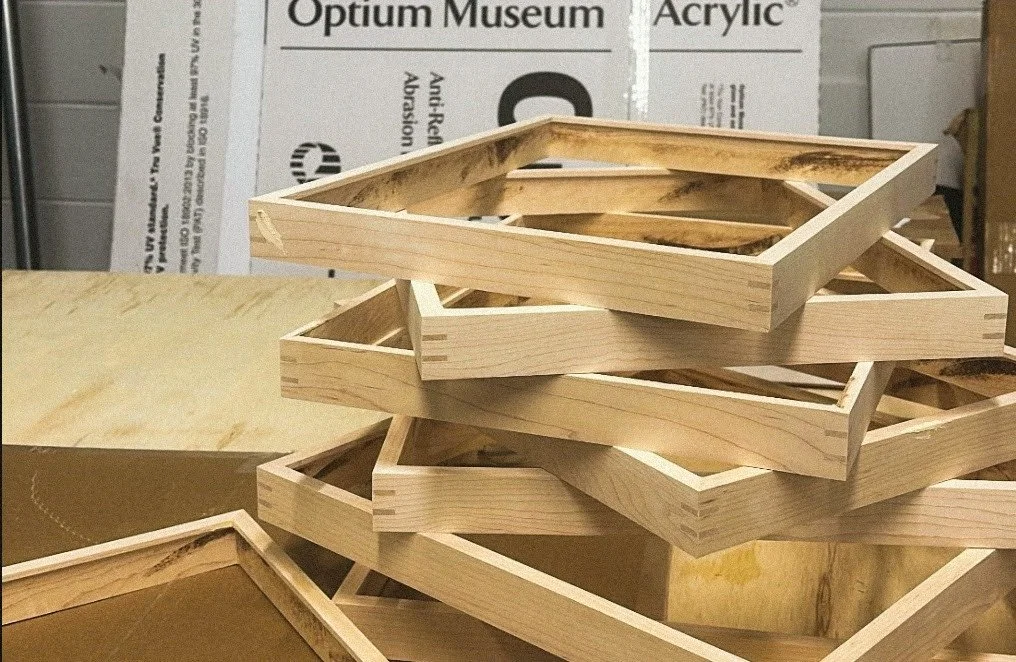
Our philosophy is built on a different foundation. While standard frames are often held together with staples and basic glue, our frames feature seamless joinery like spline or dovetail systems. We mill our own profiles from solid hardwoods, ensuring a level of craftsmanship that mass-produced frames will never achieve.
Standard shops also tend to use "permanent" mounting, like spray adhesives or non-archival tapes that stain the work forever. Our custom picture framing services treat your art as a precious object. We don't see it as a decorative filler; we see it as something that deserves to be protected for a lifetime.
Why Does Customization Matter in Archival Framing?
No two pieces of art are the same, so no two framing solutions should be either. A heavy oil on canvas needs a completely different support system than a translucent sheet of Japanese calligraphy. Customization lets us tailor the "physics" of the frame to the specific needs of the medium.
When we design a project, we look at the weight, the light sensitivity, and even how much the work needs to "breathe." For instance, some photos need airtight encapsulation, while certain textiles need air circulation to stay healthy. We adjust our spacers and backing systems to meet these unique biological and chemical needs.
That customization also matters for the aesthetic balance of the piece. We mill our profiles to exact clearances so the frame complements the scale of the work without stealing the show. This precision creates a harmonious blend of security and style that works perfectly in a home, a gallery, or a corporate office.
Who Needs Custom Archival Framing?
We find that our work is most appreciated by people who understand what’s at stake when you own art. This isn't just about finding a "pretty" frame; it’s about professional asset management for your collection.
Art Collectors: People who want to protect the financial and physical health of their investment pieces.
Galleries & Institutions: Professionals who need consistent, museum-quality standards for their exhibitions.
Artists: Creators who want their work to last for centuries and keep their legacy intact.
Interior Designers: Experts who are placing high-value art in client homes and need a custom framing service they can trust.
Corporate Collections: Organizations that treat their art as long-term assets requiring professional care.
For these clients, the frame is essentially an insurance policy. It is the first and best line of defense against the hazards of display and travel.
What Happens If You Don’t Use Archival Framing?
The damage from "cheap" framing is rarely something you see right away, but it is always coming. Over time, the acids in standard mats migrate into the artwork, turning the paper yellow or brown. This "acid migration" literally eats the fibers, making the paper so brittle that it can crumble if you try to move it.
Without UV protection, the natural light in your home will slowly "bleach" the image. Your vibrant blues will turn grey, and delicate reds might vanish completely. Once that pigment is gone, it’s usually impossible to bring it back, meaning your artwork is permanently damaged in both beauty and value.
We’ve seen so many beautiful pieces ruined by non-archival tapes and glues that seep through the paper and create translucent stains. By the time you can see the damage with the naked eye, the cost of a professional conservator usually far exceeds what the original cost of quality custom framing would have been.
What Is the Process of Custom Archival Framing?
Our process is a careful journey that puts the health of your art first. We start with a deep consultation where we look at the medium, the condition of the work, and where it’s going to hang. This helps us make the right calls on glazing and the structural needs of the frame.
Next comes the fabrication, where we mill the hardwood profiles in our own shop. We sand, stain, and finish every frame by hand using natural oils and waxes that won't release harmful chemicals. Controlling the process from start to finish lets us maintain much tighter tolerances than you'll find elsewhere.
Finally, we assemble the piece in a controlled, dust-free environment. We handle the photo mounting and glazing with extreme care to make sure no debris gets trapped inside. Once it’s done, we can even coordinate with professional art handlers to make sure the work is delivered and installed safely in its new home.
Why Does Custom Archival Framing Matter for Long-Term Value?
In the art market, "condition" is the most important word there is. A rare print in perfect condition will always be worth more than one with mat burn or faded colors. Investing in custom picture framing services is the only way to guarantee your piece stays in "Grade A" condition for decades.
When a piece of art eventually goes to an appraiser or an auction house, they look closely at how it was housed. Seeing a Woodman frame tells a buyer that you took the preservation of that piece seriously. It gives them the confidence that the work has been shielded from the invisible threats of the world.
Beyond the money, there is the cultural value of the work. Many of the works we frame are one-of-a-kind originals that represent a specific moment in time. We believe we have a responsibility to make sure these works survive so that the people who come after us can see them exactly as the artist intended.
Is Custom Archival Framing Worth the Investment?
When you’re looking at your framing budget, we always suggest looking at the long-term maths. A standard frame might save you money today, but it comes with a hidden cost: the potential loss of the art itself. If you have a piece worth thousands of dollars, cutting corners on the frame is a massive risk.
We believe archival quality should be seen as part of the cost of owning art. It is a one-time investment that protects your work for a lifetime. When you consider the price of professional restoration, a museum-quality frame is actually a very smart, modest investment.
At the end of the day, if a piece of art is worth hanging, it is worth protecting. By choosing our custom picture framing services, you are making a commitment to the life of that piece. You are making sure that the vibrancy and soul of the artwork stay alive for as long as that frame is on your wall.
Frequently Asked Questions: Understanding Custom Archival Framing
What Is Custom Archival Framing?
We define it as a specialized preservation service that pairs beautiful design with conservation-grade materials. Unlike "off-the-shelf" options, every part of the frame is chosen to stop chemical and physical damage before it starts. Our goal is to create a stable, secure home for your art that keeps it safe for a lifetime.
What Does “Archival” Mean in Framing?
In our workshop, "archival" means the materials are chemically stable and won't break down or release acids over time. It means every layer that touches your art has been purified to remove things like lignin that cause yellowing. Essentially, it’s a promise that the materials we use are as durable and safe as the art itself.
What Materials Are Used in Custom Archival Framing?
We use 100% cotton rag mats, UV-filtering Museum Glass, and solid hardwoods that we mill ourselves for perfect stability. Our process also includes archival spacers and reversible hinges made from Japanese tissue and wheat starch. Every single component is chosen because it meets the highest conservation standards.
How Does Custom Archival Framing Protect Artwork Over Time?
It works by shielding your art from its three biggest enemies: UV light, acid migration, and pollutants. By blocking 99% of light damage and keeping a pH-neutral environment inside the glass, we stop fading and paper breakdown. It’s about keeping the art in the same vibrant condition it was the day it was created.
What Are Archival Mounting Techniques and Why Do They Matter?
Archival mounting is about securing your art using methods that can be completely undone without leaving a mark. We use Japanese tissue hinging and professional photo mounting services to keep the art flat and stable without damaging the fibers. This is vital because it protects the art's integrity and its future value.
What Does “Reversible Framing” Mean and Why Is It Important?
Reversibility means that any work we do can be safely undone, returning the art to its original state. This is a must for collectors because it ensures no permanent glues or invasive tapes are used. It keeps the artwork "pure" and ensures it can be safely reframed or restored decades down the line.
How Is Custom Archival Framing Different from Standard Framing?
Standard framing often uses acidic paper mats and glass that lets in harmful UV light, which can ruin art over time. Custom archival framing is a tailored experience using museum-quality materials that are built to last. We focus on the long-term health of the work, while standard shops often only focus on how it looks right now.
Why Does Customization Matter in Archival Framing?
Every piece of art has its own "personality" and physical needs based on its size and medium. Customization lets us engineer the right support, choosing the perfect profile and mounting method for that specific piece. A "one-size-fits-all" approach can lead to buckling or damage that our custom engineering is designed to prevent.
Who Needs Custom Archival Framing?
Our services are built for collectors, galleries, designers, and anyone who owns a piece of art they want to keep forever. If you see your art as an investment or a family heirloom, you need archival standards. It’s the only choice for people who want to make sure their collection stays in pristine condition for the long haul.
What Happens If You Don’t Use Archival Framing?
Without it, your art is at the mercy of the environment, leading to "mat burn," faded colors, and brittle paper. You might also see permanent stains from cheap tapes and glues that soak into the artwork. Often, the damage is so severe that restoration costs way more than the original investment in quality custom framing.
What Is the Process of Custom Archival Framing?
We start with a thorough talk about your goals for the piece, then we move into the custom design phase. We fabricate the frame in our own shop and assemble everything in a controlled, dust-free, clean room. Finally, we make sure it’s delivered safely so the work stays protected from our bench to your wall.
Why Does Custom Archival Framing Matter for Long-Term Value?
In the art world, "condition" is the biggest driver of value, and archival framing is the best way to protect it. By stopping environmental damage, you’re preserving the authenticity and the resale potential of your art. It shows future owners that you cared enough to maintain the work to the highest possible standards.
Is Custom Archival Framing Worth the Investment?
We see it as a necessary "insurance policy" for the art you love. While it costs more upfront than a standard frame, it saves you from the huge expense of restoration later on. For anyone serious about their collection, protecting the physical life of the work is an investment that always pays off.
Conclusion
We like to think of the frame as the silent partner to your artwork. It shouldn’t be the loudest thing in the room; instead, it should provide a quiet, elegant strength that protects the work while you enjoy it. At Woodman Frames, we take that job seriously, mixing old-school craftsmanship with modern science to create the very best in art protection.
By focusing on the physical health and stability of your collection, we’re helping you turn a temporary display into a permanent legacy. Our commitment to reversible, conservation-grade methods means your art stays as vibrant as the day it was born. We’d love to help you with your next project and show you the care and precision your collection deserves.
Ready to protect your investment for the years to come? Contact us today to schedule a consultation and see how our custom picture framing services and photo mounting service can keep your collection beautiful and valuable. Let’s work together to build a frame that lasts as long as the art inside it.