

Creative Framing for Original Work
There’s a certain kind of adrenaline rush that comes with buying an original piece of art. It might be a raw charcoal sketch, an oil on canvas with some seriously textured layers, or a delicate collage made with mixed media.
Whatever it is, it’s going to be one-of-a-kind, and because it’s irreplaceable, creative framing enhances both the beauty and value of original artwork, making the way you chill with it afterwards just as important as the work itself.
A frame is really just a bridge between the artist’s studio and the wall of your living room. We don’t just see it as a frame; we see it as a chance to celebrate the soul of the original artwork.
Our team collaborates closely with artists, artisans, and clients to deliver custom solutions that reflect both craftsmanship and the unique vision of each piece. And that means we don’t think a standard, off-the-shelf border will cut it.
Custom framing is the way to go, and by custom, we mean building a unique, protective home that celebrates the artwork in all its glory.
When we start a new project, we look at the piece not just as an image, but as a physical thing with its own history. Working with professionals ensures your artwork’s life and value are preserved through expert framing choices and materials.
Our goal is to give the artwork the structural sanctuary it needs so that it stays vibrant for another 20 years from now. We do that by mixing high-end design with good old-fashioned art preservation techniques; basically, we turn a simple display into a masterpiece of preservation.
Why does creative framing for original work require a more thoughtful approach?
The unique thing about original art is that it can’t be replaced. That means we have to use materials that aren’t going to damage it over time. High-quality materials are essential to protect artwork from UV rays and humidity, ensuring its longevity and value.
The issue is not with standard frames themselves, but with large framing stores or cheaper framing options that do not use proper conservation materials. When acidic mats, poor-quality backing boards, or non-archival materials are used, the artwork can develop frame burn, yellowing, or long-term surface damage. For an original, the focus should always be on preservation-focused framing that protects the piece for years to come.
We get asked a lot about this concept of “honoring the artist’s vision.” That means the frame should be a kind of second piece of art in and of itself, respecting the colors, textures, and dimensions of the original. It’s a bit of a collaboration between the artist and us, balancing design with safety and structural integrity.
Museum-grade matboard is the highest quality material available and is expected for permanent framing of valuable original artwork, meeting the standards used by museums for long-term conservation.
By doing it this way, we’re basically investing in the artwork’s future. We think about all sorts of things, like the humidity in your home, or the fragility of the pigments the artist used. That way, the presentation never comes at the expense of museum-grade protection.
How can you use shadowboxes and float mounts to add some extra dimension?
One of the best ways to really make an impact is with creative shadowbox designs. Shadowbox frames provide 3D depth, making them ideal for textured art, and allow pieces to sit away from the glass.
These frames are designed to give you a little bit of extra depth, allowing us to create a space between the artwork and the glass. That’s especially cool if you’re working with mixed media; the way the light and shadow play off each other is really something special.
For works on paper, we often recommend a gallery-style float mounting or floating frames. Floating frames create a small gap between the canvas and the frame, enhancing the artwork's appearance.
Floating or float mounting allows artwork, especially prints with interesting edges or signatures, to sit on top of the matting without overlap, showcasing the entire piece. This technique helps achieve a striking visual effect and highlights the details and sides of the artwork.
Elevated float mounting creates the illusion that the artwork is floating above the mat, enhancing visual impact by casting a shadow underneath the piece.
To do that safely, we use internal spacers to make sure there’s a bit of breathing room between the artwork and the glazing. That’s just a fancy way of saying we make sure the art never touches the glass or acrylic.
It keeps the moisture out and just adds a whole extra layer of dimension to the piece.
Which solid hardwoods are best for creative framing?
The quality of the wood you use is what makes a frame solid or not. We believe in using materials that will provide a stable, warp-resistant home for your most special pieces. That’s why we source our wood from ash, maple, walnut, white oak, cherry, and all sorts of exotic hardwoods.
Skilled artisans carefully select and work with these hardwoods to ensure the highest level of craftsmanship, resulting in frames that stand up to the demands of a really special piece.
When we design a frame, we select from a specific list of high-quality wood samples to match the mood of the original artwork. Clients may prefer certain woods to match their personal taste or the preservation needs of their artwork.
Each wood has its own unique grain pattern and density, so we can use that to create a design that’s either super modern or super classic. Using these solid hardwoods is a matter of course for any serious contemporary framing.
Unlike softwoods or composite materials, these timbers have the strength to support heavy glazing and deep shadowbox profiles without warping. They give the artwork the permanent structural backbone it needs for long-term display.
And because we mill all our wood in-house, we can guarantee every length of timber is inspected for quality and durability.
What makes a hand-applied oil finish better than standard sprayed options?
The finish of a frame is what gives it that human touch. We love the deep, organic luster that comes from hand-rubbing natural oils; it lets the character of the wood shine through, rather than hiding it under a layer of plastic.
A lot of standard frames use industrial sprayed finishes that can look cold and artificial. And sometimes, you get this weird “orange peel” effect, it’s like the skin of a citrus fruit! You won’t find that on a Woodman Frames product, because we steer clear of synthetic sprays entirely.
By choosing natural oils for our frames, we see to it that the frame ages well alongside the art it’s displaying, or rather, we let it mature with the same care and attention that went into creating the original work. These oils seep deep into the wood, not only protecting it but also leaving a silky smooth surface that just begs to be touched.
The result is a frame that enhances the beauty of both the wood and the artwork, elevating the overall presentation. It’s this old-world approach to finishing that makes our frames feel like a full-fledged part of any fine art collection.
Why is the choice of UV glass and UV acrylic so vital when it comes to protecting original pieces?
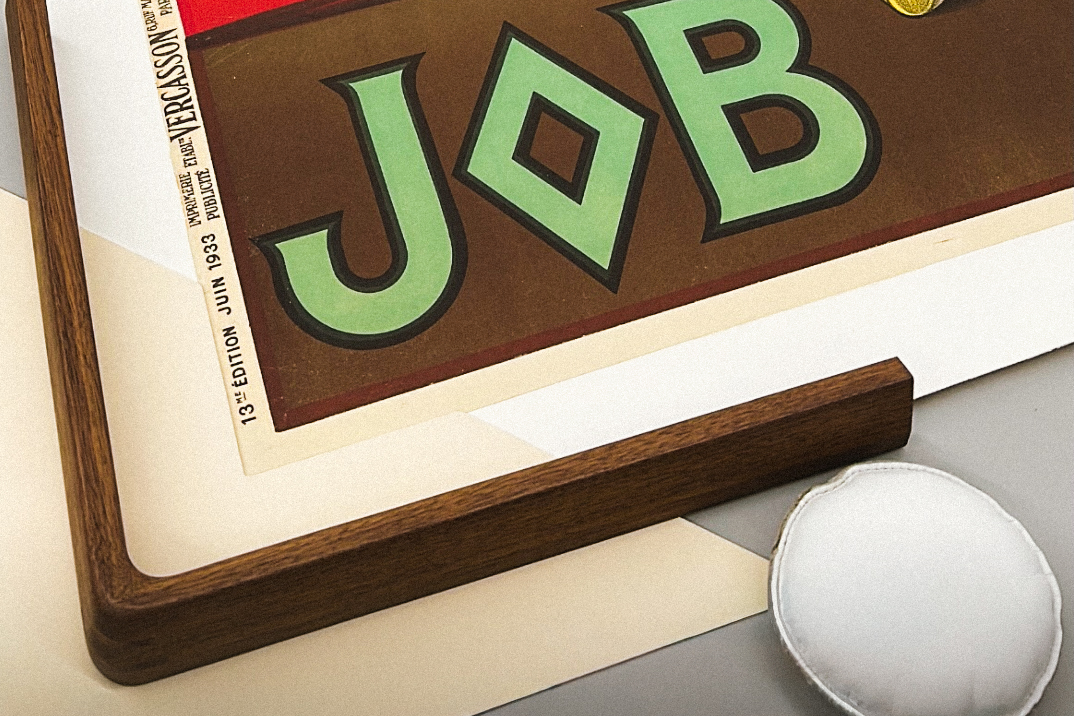
The thing is, light can be a major enemy of the art we want to preserve; it causes irreversible fading and breaks down the very fibers of the artwork.
So to fight back against that, we offer a range of top-notch glazing options that are all designed to block out 99% of those damaging UV rays.
We use both UV glass and UV acrylic because both have their strengths and weaknesses when it comes to keeping your art safe, but in the end, it’s about choosing the very best product for the specific job at hand.
Anti-reflective glass reduces reflections by more than 87%, making it the best choice for picture framing to ensure that artwork stands out without obstructions.
The process of applying anti-reflective coatings involves advanced vacuum coating techniques, resulting in coated glass that both protects and enhances the artwork. These glazing options are trusted by professionals, museums, and galleries to protect valuable artwork.
Museum Acrylic Optium is the ultimate in clarity and safety, and that’s why we use it in some of our most demanding applications. It’s anti-static, which is a big deal if you’ve got charcoal or pastel; it stops the pigment from being pulled right off the paper.
But it’s not just about protection. Our anti-reflective coating lets the art speak for itself by eliminating all those distracting reflections and glare. What you’re left with is that perfect, unobstructed view that lets you see every last detail of the artwork.
How does professional photo mounting ensure that your display is still reversible?
For us, the most important rule in conservation-level mounting is that you’ve got to be able to reverse it all, and we take that very seriously.
We use non-invasive techniques, like hinging with Japanese paper and adhesives, that let us secure the art without doing any irreversible damage. That way, whenever you need to put the art away or move it to a different spot, you can do it without a problem.
Note: When mounting artwork, the window mount and back mount are typically made using 4ply or 8ply archival board, depending on the level of depth, rigidity, and presentation required. Standard 4ply board is approximately 1 to 2 millimeters thick, while 8ply provides additional depth and support for more substantial or museum-quality presentations. For heavier framed pieces, appropriate hardware should always be used to securely fasten them.
One of the tools we use to really elevate the art is creative matting. By using a big ol’ margin or a deep bevel, we can create this sense of scale and importance that just isn’t there with standard framing.
Tip for customers dealing with photography and prints: Always use archival-quality materials and proper mounting techniques to ensure long-term preservation and prevent damage. Float mounting is an excellent option for showcasing the edges, texture, and full surface of certain prints, photographs, and works on paper. With conservation-focused custom archival framing services, each piece is handled with the care, precision, and preservation standards it deserves from start to finish.
Frequently Asked Questions About Creative Framing for Original Work
Can creative framing even boost the price of my original art?
Absolutely. When you’ve got expertly crafted custom frames, often chosen by interior designers for their ability to complement a variety of styles, including simple and modern frames, it sends a message to collectors and galleries that your art is serious business.
And if you’ve got that art snuggled up in solid hardwoods with UV protection, it just looks like you care, and people who own art tend to care about that.
Is it really safe to frame an original oil painting without any glass?
Now, some people do display oil paintings without glazing, but the thing is, they’re still vulnerable to dust and pollutants and accidental touch. Putting in a deep shadowbox with UV glass or acrylic just gives you that extra layer of protection you need without sacrificing the texture of the painting itself.
How do I choose between a float mount and a traditional mat for an original sketch?
It all comes down to the paper itself. If you’ve got a sketch with those beautiful hand-torn edges, the sort of thing you find with deckled paper, then a float mount is probably the way to go.
But if you’re looking for a clean, formal look that puts the focus strictly on the image, then traditional matting is probably your best bet.
Oversized mats can create a high-end focus for small artworks, such as sketches or postcards, while mirrored frames add glamour and can make dark art or small spaces appear brighter..
What are some flexible ways to display framed artwork?
Picture ledges allow for easy rotation and layering of framed artwork, making it simple to refresh your display whenever you like.
For more design ideas and resources, visit our site to explore creative framing solutions and inspiration.
Conclusion
When you’re talking about framing an original work of art, you’re walking this tightrope between art and engineering, and we get that. You’ve put a lot of time, money, and emotion into creating something truly special, and we want to make sure the framing reflects that.
Every single choice we make, from the type of wood to the finish, is about showing your art off in the best possible light, with careful attention to detail and a focus on preserving the value of your work.
We’re not just placing a frame around a picture. We’re creating a bespoke, preservation-focused environment for the artwork, supported by an environmentally controlled space designed to keep pieces protected throughout the framing process.
Your art shouldn’t have to settle for any old display. If you are ready to give your collection the top-grade protection and visual flair it deserves, then our team at Woodman Frames is here to help.
We value our ongoing relationship with customers and are committed to delivering value through every project.
Contact Woodman Frames today to see how our picture framing services can help you turn your irreplaceable pieces into real showstoppers, and help you build a future for those art pieces that’s just as beautiful as they are valuable.