

How Much Does Custom Framing Cost?
We’ve all been there: standing in a craft store, staring at a wall of ready-made frames with a beloved print in hand, feeling frustrated that the colors and sizes just don’t match.
Ready-made frames are typically available only in standard sizes, which can be a major limitation if your artwork doesn’t fit those dimensions. The standard options feel like a temporary fix rather than a long-term solution.
At that point, you start to wonder if you should choose custom framing for your treasured memories.
Getting into the world of bespoke design can be a bit bewildering; it’s like decoding a secret language of ‘moldings’, ‘glazing’, and ‘archival mats’. Often, we hear from clients who are surprised by the price gap between a $20 mass-produced frame and a high-end custom job.
At Woodman Frames, we’re all about pulling the curtain back and showing you exactly where your money is going when you choose professional craftsmanship. It’s important to decide which framing option best suits your needs, considering factors like cost, aesthetics, and preservation.
Understanding why custom framing costs what it does helps you make smarter decisions about presentation and preservation, whether you’re framing a limited edition print, a work on paper, a photograph edition, or an exhibition-ready piece. The real value isn’t “a frame,” it’s the system: conservation-grade materials, museum-level glazing, reversible mounting, and precision fabrication that protects the work and elevates how it reads in a space.
So, let’s dive in and look at the true cost of this craft and what you can expect to pay for a finished product that will last a lifetime.
What's Driving the Range in Custom Framing Prices?
When people ask us how much custom framing costs, they often get confused by the difference between ‘off-the-shelf’ items and true bespoke artisan work. Cheap frames you can pick up at the big-box stores are mass-produced using low-cost materials like plastic or MDF.
These are designed for quick, temporary displays rather than long-term protection or looking perfect.
Custom framing is a labor-intensive craft that requires years of training and specialty tools. Custom framers bring expertise, craftsmanship, and personalized service to each project, selecting premium materials and offering detailed consultations to ensure your artwork is preserved and displayed at its best.
At Woodman Frames, we build a mini-environment designed to protect your artwork for decades, cutting every piece to a precise millimeter for a flawless fit.
There is also a “Cost of Quality” when it comes to the components we choose for your project. The custom framing cost is higher than ready-made options because of the superior craftsmanship, premium materials, and labor involved.
Most cheap frames use cardboard backers and acidic mats that will eventually turn your paper yellow; this is known as ‘acid burn’. We use only acid-free mats that cost more upfront but stop your print from turning into a ruined piece of history.
The Human Element: Paying for Skilled Labor
Choosing a professional framer means you are paying for a skilled trade, just like a carpenter or tailor. We spend hours on a single piece to get the presentation just right, cleaning the glass, mounting the piece with reversible techniques, and sealing the back to keep dust and insects out.
In addition to this expertise and care, clients benefit from a personalized service that includes bespoke customization, expert consultation, and a seamless, all-in-one framing solution.
These fees reflect the level of expertise required to handle delicate, often limited-edition items without causing any damage.
What Are The Main Factors Determining Your Final Cost?
The first thing we look at is the size of the artwork you bring into our studio. A 24×36 frame requires significantly more materials, wood, glass, and mounting board than a small 5×7 piece.
Larger works may also need thicker, sturdier glazing to stop them from bowing or stressing over time. These choices can significantly impact not only the final price but also the preservation and longevity of your artwork.
Next, we look at the molding, which is often priced by the linear foot. Budget-friendly options usually include simple aluminum profiles, while mid-range choices move into stained basswood, with oak being our premium range.
Premium solid hardwoods like walnut, or hand-gilded classic framing styles, sit at the top of the price hierarchy due to both material cost and the level of craftsmanship involved.
One factor that works in our favor is that we mill our frames in-house from rough hardwood lumber. Instead of choosing pre-made molding, we build the profile ourselves, cutting, shaping, and refining it to suit the artwork.
That added level of craftsmanship can affect cost, but it also means we can custom-design nearly any wood profile, proportion, reveal, or edge detail, and match finishes with much greater control. If the right frame doesn’t exist yet, we can make it, something not every frame shop is equipped to do.
The choice of glazing (glass or acrylic) is often where the price differences occur. We often talk about the benefits of UV-filtering glass or Museum Glass, which is virtually invisible and blocks 99% of the harmful rays.
A Quick Look at Matting and Mounting
Matting and mounting both affect pricing, as they increase both materials and labor. And of course, they have a big impact on the long-term preservation of the artwork.
Additionally, your choices in matting and mounting play a key role in the overall layout, influencing how the arrangement and composition of the artwork are visually presented within the frame.
Standard Single Mat: Gives a clean border and stops the artwork from touching the glazing.
Double or Triple Matting: Adds depth and contrast, but increases material use and labor complexity.
Weighted Bottoms: A classic technique where the bottom margin is slightly wider, adding visual balance and a gallery-style presentation.
What Can You Expect to Pay for Common Frame Sizes? To Give You a Better Idea of Your Potential Investment
So you want to get a better feel for what your framing project might cost, right? Let’s start by looking at what you can expect to pay for common photos and prints. For small items like diplomas or 8x10 photographs, you’re often looking at a minimum of $250, but that’s still just the beginning.
Generally, the price range for small custom framing projects falls between $250 and $400, depending on materials and complexity. One of the biggest factors driving the price up is actually the time it takes to set up the frame, even for a small piece.
For medium-sized fine art, think a 16x20 archival print or a vintage poster (the collectible kind), or maybe a small original on paper. At our boutique conservation shop, pricing for entry-level work (think “the basics”) starts around $350.
Now, at this level, you’re already getting acid-free mat board and UV-protection glazing - and that’s because the whole point of conservation framing is to preserve the piece, not just make it look nice for now.
From there, the price goes up based on the molding (solid wood versus fancy profiles and finishes), any upgrades in glazing (higher-clarity or museum-grade options), and any special mounting needed to make sure the piece stays stable long-term.
For really big works, like 24x36 fine art photography, gallery prints, or valuable oversized works on paper, projects start at around $550. The bigger the piece, the more structural support it needs (stronger backing, more robust fitting, and hardware that won’t bow or stress the art over time).
This is also where archival choices just become a given for collectors and families preserving heirlooms: if you’re looking to prevent fading, acid burn, warping, or long-term deterioration, you need the right materials and methods, not just “making it look nice on the wall”.
What Are the Extra Costs for Specialty Framing Projects?
Let’s discuss the unique requirements and considerations involved in specialty framing projects, such as shadow boxes and textiles, to help you understand the benefits of custom framing and why expert advice is important for these items.
Some works require a deeper, more supportive build, a “home” designed to accommodate their depth. In these cases, we fabricate custom deep-profile frames and spacer systems to accommodate dimensional or layered pieces, while keeping the presentation clean and secure.
The labor involved in “floating” these objects and making sure they’re secure yet invisible is way more complicated than just framing a picture.
Framing fine art textiles and heirloom fabric pieces, like vintage or heritage rugs, antique needlework, ceremonial textiles, embroidered works, and sentimental family heirlooms, is one of the most detail-driven services we offer here at Woodman Frames. If done properly, these pieces aren’t just “stuck down” or stuck on aggressively, which can damage the fibers and devalue the work.
Instead, we use conservation-minded mounting techniques that support the textile evenly and prevent sagging, rippling, or stress on fragile areas over time. Often, we have to hand-stitch or use reversible support methods, and we have to plan carefully around spacing, tension, and how the textile will age inside the frame.
Since textile projects vary so much based on dimensions, material condition, weave/thickness, and stabilization requirements, we give each one a custom quote rather than try to publish a starting price.
If you have a canvas painting, the first thing we have to do is stretch the canvas. We build a wooden frame called a “stretcher bar” to pull the fabric tight before we can even think about adding a decorative outer border.
This two-step process makes sure the paint doesn’t crack, and the image stays perfectly flat and vibrant on your wall.
Does the Choice of Glass Really Change the Price That Much?
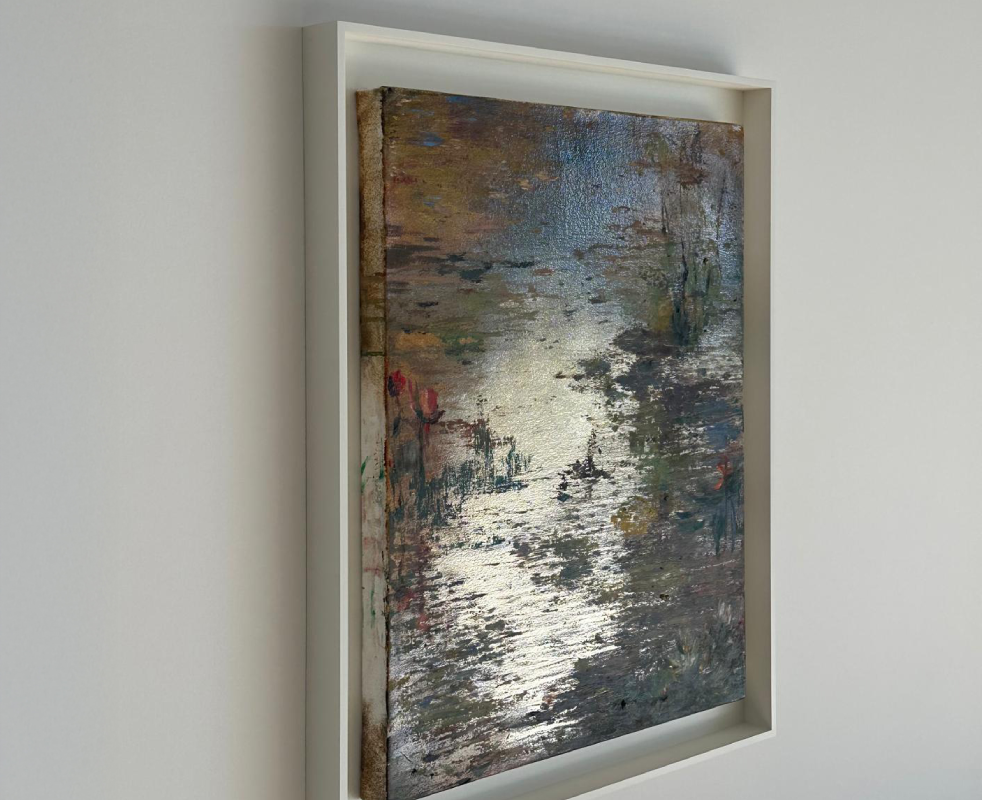
The short answer is: yes, the glazing (or “glass”) can absolutely be one of the most expensive parts of a professional framing project. At Woodman Frames, we don’t use regular glass; our baseline is actually UV-protective glazing. We do this because our work is focused on preserving pieces that actually matter: fine art, vintage prints, and family heirlooms.
From there, conservation-grade upgrades can make the price go up even further, especially when you move into higher-clarity or museum-level options. If your piece is going to live in a bright space, you really need UV protection, because light damage is permanent, and paying for it now is almost always cheaper than trying to fix an irreplaceable artwork later.
We also have to think about Acrylic (Plexiglass) versus traditional glass, especially for really big pieces. Acrylic is shatter-resistant and lighter, which makes it a safer choice for hallways with a lot of foot traffic. However, high-quality, scratch-resistant acrylic is often more expensive than regular glass.
The “Gold Standard” in our shop is Museum Glass and Museum Acrylic, and we think it’s worth it. It has an anti-reflective coating that makes the glass seem to disappear, so you can really see the colors pop. These options not only protect your artwork but also enhance its visual presentation, making the piece stand out and look its best.
While it can add on to the quote, most clients feel the visual clarity makes a huge difference once they see it in person.
Are There Any Hidden Fees in Custom Framing Quotes?
When you get a quote from a local framer, it usually includes a labor and assembly fee, which covers the time we spend making sure the glass is clean and sealing the back with a professional dust cover. We also include the cost of high-quality "D-rings" and coated hanging wire in the price of our framing, so your art is ready to hang straight away.
If you're in a rush, be aware that we charge anywhere from a 15% to a 100% surcharge on rush orders, depending on how last-minute it gets. That's because custom framing relies on a supply chain that isn't always in stock, and we need to factor in the extra cost of getting materials delivered overnight and moved to the front of the line.
When it comes to really heavy pieces, think large mirrors or wooden carvings, for example, we may need to use specialized "Z-bar" hangers to take the weight. These aren't "hidden" fees, by the way, but rather extra costs to make sure your heavy investment stays safely on the wall where it belongs.
How Does the Cost of Online Framing Compare to Working with a Local Shop?
The rise of online framing has brought a new way of getting a custom look without breaking the bank. The big online framing companies have massive warehouses, which lets them offer lower prices on the frames themselves.
However, we find that shipping costs for large frames can quickly wipe out those savings.
When you work with a local framer like us at Woodman Frames, we take full responsibility for the safety of your art from the moment you bring it to us.
With online services, on the other hand, you usually have to send your original artwork in the mail. That introduces the risk of loss or damage in transit, which is a major concern if you’re dealing with one-of-a-kind pieces. The choice of framing method, whether online or local, can truly make or break the outcome, both in terms of presentation and the safety of your artwork.
The biggest difference, though, is the personalized consultation. When we work together, we can hold different samples up against your artwork to see how the colors look.
Online “virtual previews” are helpful, but they can’t beat the accuracy of seeing the texture of a linen matting or the true grain of a walnut frame in real light.
Is Spending Money on Professional Custom Framing a Smart Financial Investment?
We like to look at preservation through the lens of “Cost per Year”, rather than just the initial price tag. If you spend $350 on a high-quality frame that will protect your art for 40 years, you’re essentially paying $5 a year for home decor.
Compare that to a dodgy DIY fix that ruins the artwork in five years, and the professional option is a no-brainer.
High-quality framing also ups the aesthetic value of your home. A well-framed piece of art acts as a focal point, making a room feel “finished” and intentional.
It shows that you care about your environment and the stories that the things on your walls tell, which adds a sense of luxury to your living space.
A custom frame should complement both the artwork’s colors and textures as well as the room’s decor, creating a cohesive and harmonious presentation.
The end goal, for us, is to preserve your history. We’re not just making something look nice; we’re acting as guardians for your memories. By choosing a custom frame with the right frame, we make sure that your family will be able to enjoy the same art pieces that you see today.
Frequently Asked Questions
Why does a bigger frame cost so much more than a smaller one?
It’s not just about the extra bit of wood; larger frames need acrylic glass to stop them from bowing, more expensive, heavy-duty mounting boards, and a lot more time to assemble safely in the studio.
Can you just cut a custom mat for my existing frame?
We don’t offer “mat-only” jobs or re-fit artwork into frames we didn’t build because proper preservation framing is all about the whole system working together, frame, glazing, mounting, backing, sealing, and hardware.
If you want to protect a valuable print or artwork on paper, we recommend a complete conservation framing approach so everything is correctly matched and installed for long-term stability.
Do you frame textiles like heirlooms or fine art fabrics?
Yes, heirloom and fine art textile framing is something we handle using conservation-minded, reversible mounting methods that support the textile without causing permanent damage.
Because textile projects can vary so much depending on the size, fragility, thickness, and amount of stabilization needed, pricing is always quoted on a case-by-case basis.
Is metal always cheaper than wood?
Most of the time, yes, simple aluminum frames are very budget-friendly. However, there are high-end designer metals and hand-welded steel frames that can actually cost a lot more than a basic basswood.
Does museum-grade glass really make a difference?
In our experience, yes, it gives maximum protection and is treated with a coating that makes it virtually invisible. It’s the gold standard for any artwork that’s either very valuable or holds deep sentimental meaning.
Do you offer custom framing options for photographers?
Yes, we provide custom framing solutions specifically tailored for photographers. Professional photographers often require framing that enhances the presentation of their work and meets archival standards for their clients.
We offer a range of frame styles, matting options, and glazing choices designed to showcase photography in the best possible light, whether for gallery exhibitions or client displays.
Custom framing is an investment in your home and your history. While the upfront cost may be higher than a store-bought alternative, the long-term benefits of preservation and beauty are unbeatable. At Woodman Frames, we believe every piece of art deserves to be shown off in its best light.
Ready to turn your vision into a one-of-a-kind piece of framed artwork? Come on over to Woodman Frames and take a look around to get a feel for the style that catches your eye, & if so, let one of our pros sit down with you to bring your ideas to life when you come in for an appointment.